
The California Newt Arms Race
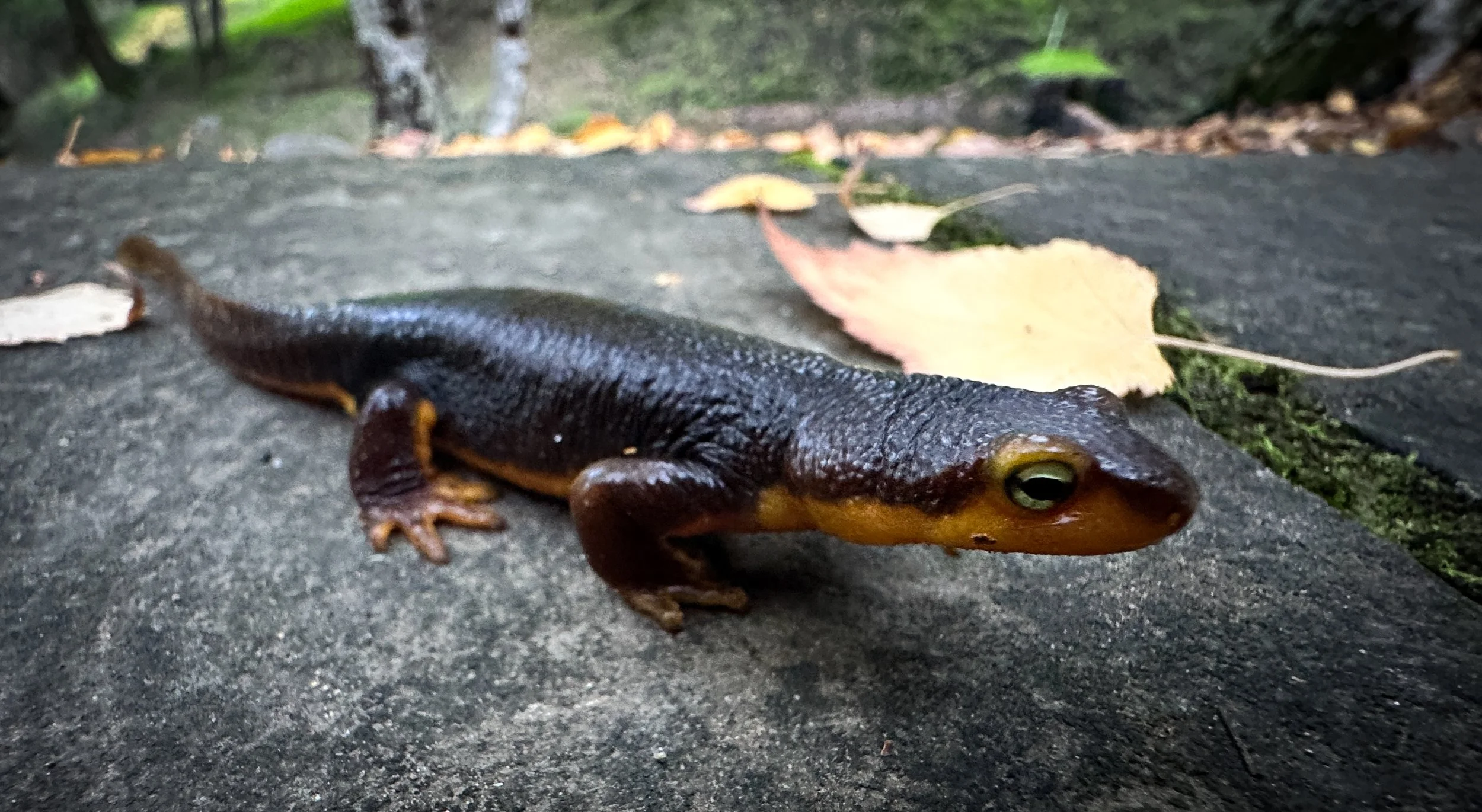
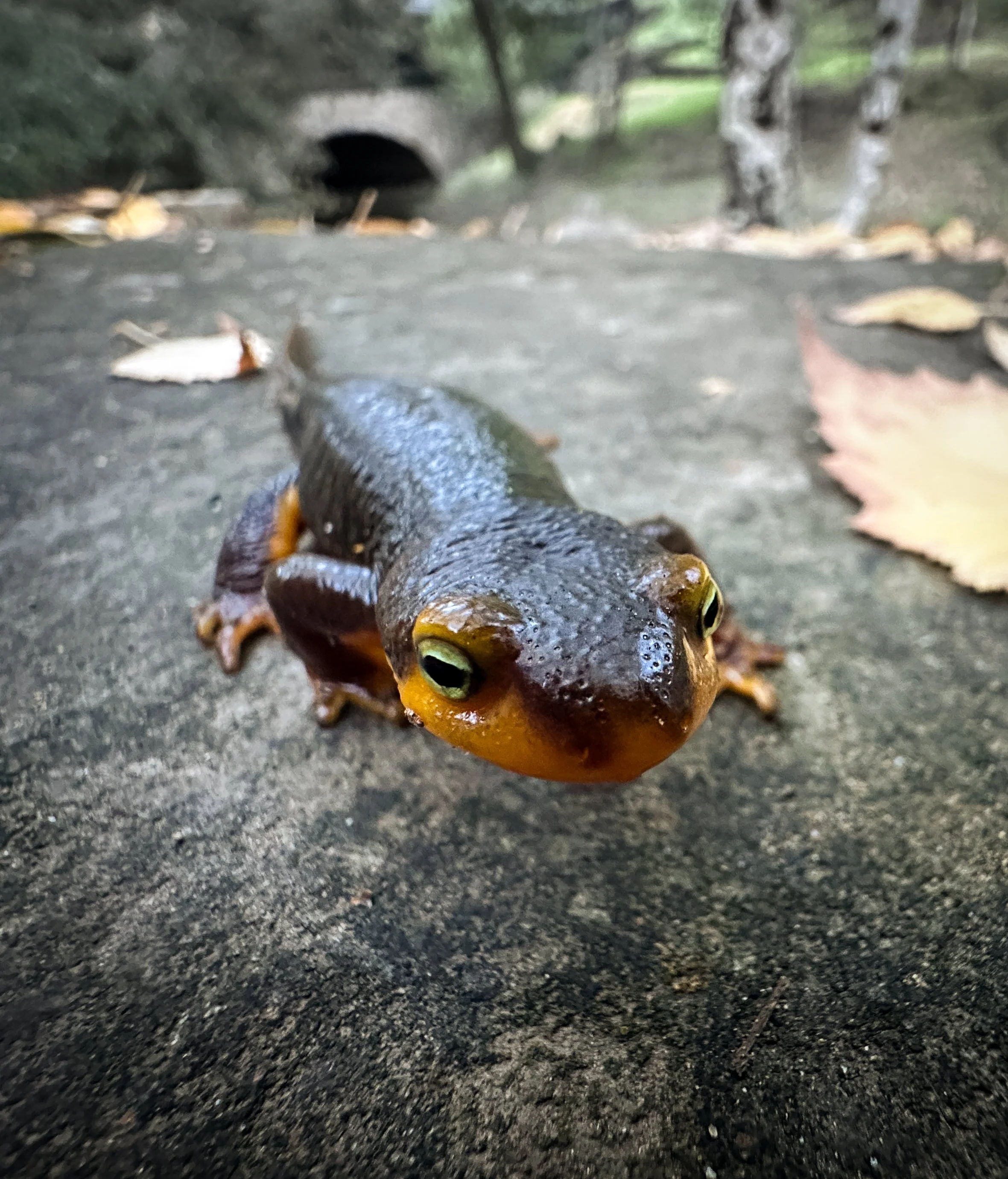
My day job recently took me to California. On a riverside stroll trying to get my head on straight, I nearly stepped on a tiny fella I was unknowingly sharing the path with: a California Newt.
Back home in Ontario, newts are rare. Seeing one (actually turned out there were two - I might have been interrupting something) so boldly cohabitating a paved walkway was something of a shock. I worried that the next passer-by might miss them entirely and do what I’d almost done - squish them underfoot.
But their bright orange underbellies sent the intended message: this little guy might be toxic. Not knowing for sure, I found an appropriate stick to delicately encourage both of them back to safer ground.
Turns out caution was warranted. True to their dramatic colouring, California newts are in fact toxic. Glands in their skin secrete tetrodotoxin (also shortened to TTX). If you’ve ever heard of the danger of eating puffer fish? Same toxin!
This got me thinking about animal toxicity, and the biological mysteries it invites*.
We hear about these extremely toxic ( / venomous / poisonous) animals, like the puffer fish, or jellyfish or stonefish or blue-ringed octopuses. And they’re full of superlatives: ‘a single drop of their venom could conceivably kill a herd of full-grown elephants’ or whatever it is.
California newts are no slouches either. TTX is more than a thousand times more potent than cyanide. A newt can have enough TTX in their system to kill twenty people. See? Superlative.
And it’s all very impressive and dramatic and immediately has me asking why. If the basic function of this neurotoxin for the newt is to avoid being eaten by predators, well… is this not an insane amount of (literal) overkill?
It’s not like they often have to contend with predators the size of twenty humans. And evolution (oversimplifying) adapts to specific conditions through selection pressures: in other words, it should tend to balance out at ‘just enough toxin to avoid being eaten’, not some kind of ‘just to be safe’ indulgence of extra effort and energy. That inefficiency should be curbed if it’s not advantageous, right? So what advantage is conferred by not only being toxic, but by being so extremely over-the-top- toxic? What selection pressure could have caused that?
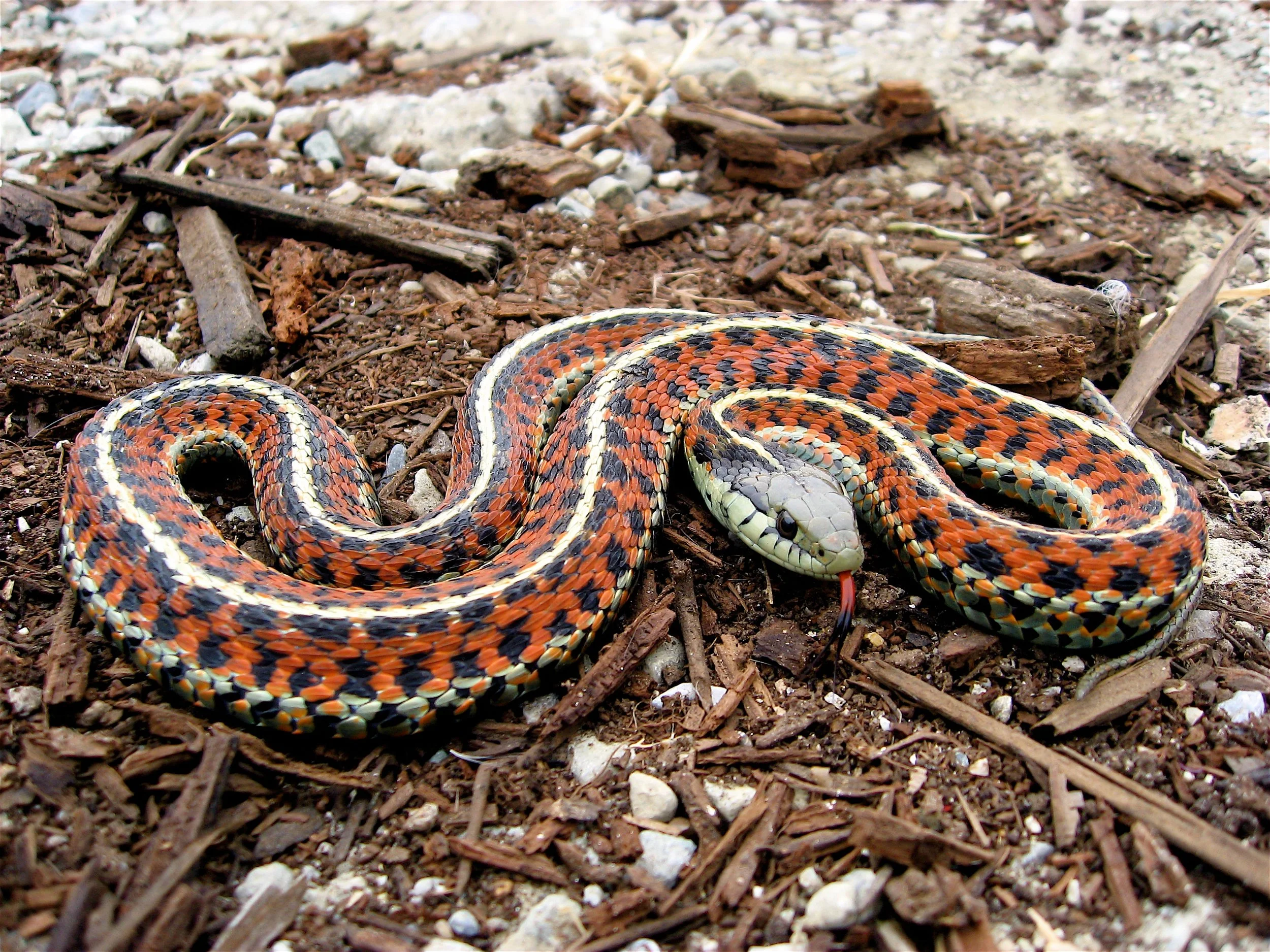
Let’s ask the primary predator of the California Newt: garter snakes. Or rather, their ancient ancestors around 170 million years ago.
Some of those ancient reptiles wound up with a gene mutation - SCN14A, if you’re curious. It had to do with their sodium channel proteins in skeletal muscles - and had nothing at all to do with newts or their toxicity - newts hadn’t even evolved yet.
So for 125 million years, that harmless gene mutation stayed tucked away as those ancient reptiles evolved into modern garter snakes.
But 45 million-ish years ago, who arrives on the scene? Newts! Newts who have evolved to secrete TTX as a defence.
And quietly waiting in the snakes’ genetic code was that mutation which, it turned out, very serendipitously conferred a natural resistance to TTX.
See, TTX usually works by blocking the movement of sodium ions across cell membranes by attaching to voltage-gated sodium channels. But this SCN14A gene mutation changed the outer pore region of the sodium channel, making it much harder for the TTX to bind to the sodium channel and do what it does that makes it toxic.
And thus the lines are drawn in what we call an evolutionary arms race. The snakes have an advantage: they can bypass the newt’s defences. This puts a selection pressure on the newts. Those who can produce more and more potent TTX are more likely to survive and reproduce, because a strong enough dose of toxin can still overwhelm the snake’s natural defence. So over time, the level of toxicity in the newts rises.
Advantage: newts. Selection pressure is now on the snakes. Whoever can withstand this higher level of toxicity is more likely to not die when they eat newts, and go on to pass their genes on. So, the snakes’ resistance increases.
And back and forth and back and forth we go, until you have newts who need a level of TTX sufficient to kill 20 humans just to keep from being eaten by a garter snake.
Interestingly, it’s possible we’re reaching a breaking point in this race. The snakes have ratcheted up their defences so much that they are now effectively approaching immunity: the newts simply cannot physically carry enough TTX to incapacitate them.
So what happens next? Where does the evolutionary arms race go from here? We’ll just have to wait a few more million years to find out.
*Another mystery: why would puffer fish and newts secrete the same toxin? This is actually a bit of a controversy. In puffer fish it’s fairly agreed upon that they ingest bacteria who synthesize TTX and use them as toxin factories. And it was assumed that newts probably did the same thing - but we’ve failed to find concentrations of those bacteria in the most toxic tissues of newts. So there’s speculation the newts may have their own biochemical process to produce TTX while puffer fish rely on ingested bacteria to do it for them.