Return to Black Oak Savannah
I couldn’t help myself with the black oak savannah.
Having accidentally ended up there on prescribed burn day, it felt like a sign. I didn’t yet have a hook for an episode (besides the burn itself) but here was a rare ecosystem a simple subway ride away. There’s also a real particular comfort when your self-assigned assignment is capturing a place rather than an animal. Animals are fickle and fleeting and often just don’t show up. But that savannah, those black oaks, I knew they were gonna be there. Which puts you in the more meditative, less intense position of just capturing a place, at your own pace, with all the time you need.

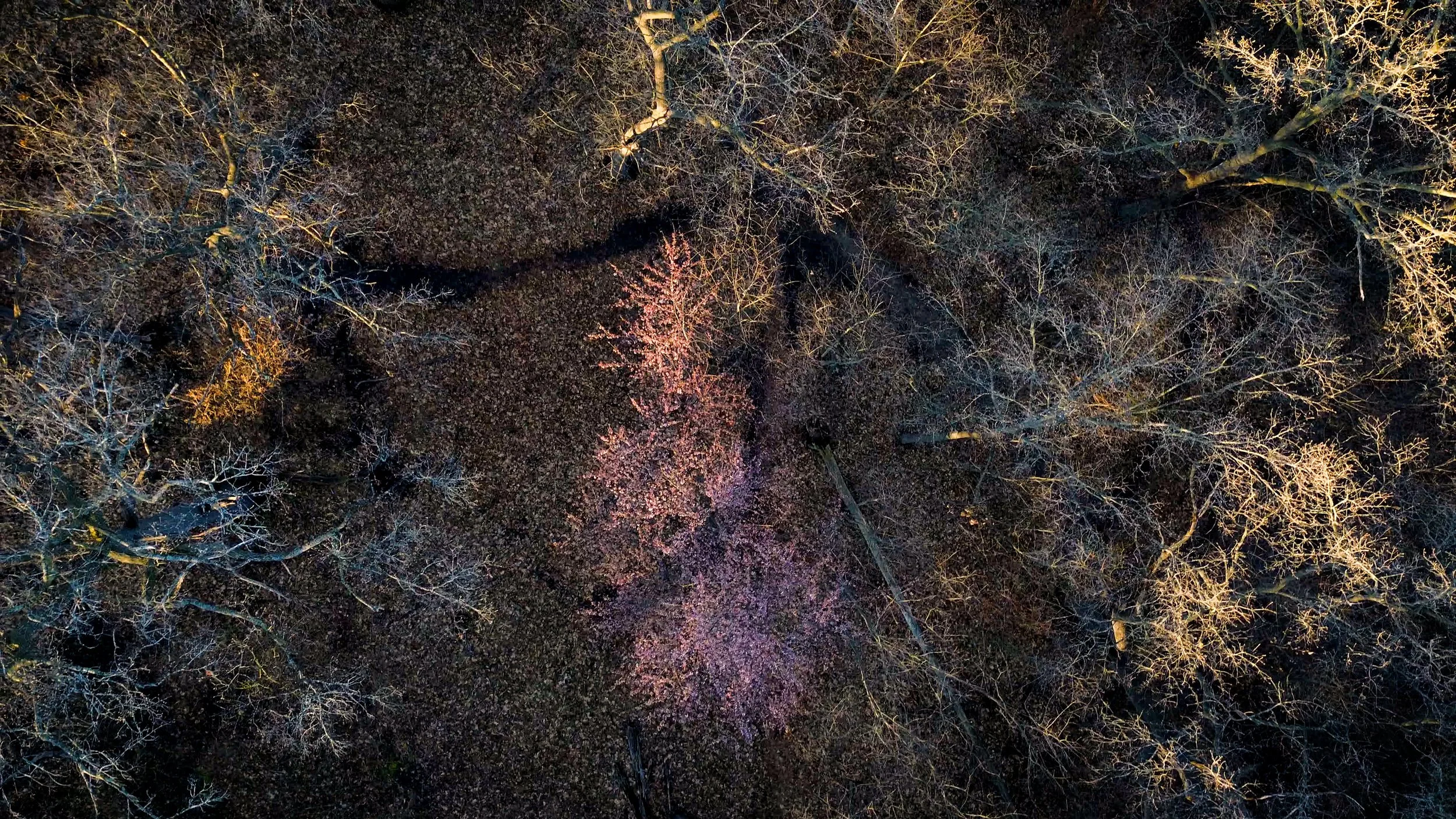
So that’s where I found myself first thing in the morning, waiting for the sun to crest the hill and light the Savannah. I even hauled the drone out to catch the spreading, budding branches of those black oaks and get a top down view of what makes the place so unique. It was, as intended, a very peaceful morning, interrupted only by a very shrill and very insistent northern flicker in one of the trees.
There was also a specific animal on my to-do list. Certain open spots of the sandy ground are pockmarked with little holes. At a glance they could be mistaken for anthills but the openings are too big for any Ontario ants. They’re actually the burrows of ground-nesting bees, a perfect example of the sort of life that needs the specific conditions of the black oak savannah to thrive.

The last time I’d been, there’d been a small swarm of them hovering around the burrows, so I thought this would be a fish-in-a-barrel situation, but the burrows were still and silent. Likely it just hadn’t warmed up enough for them to venture out. So I shot the burrows themselves, and decided I’d make a loop and come back a little later in the day to see if I was right.
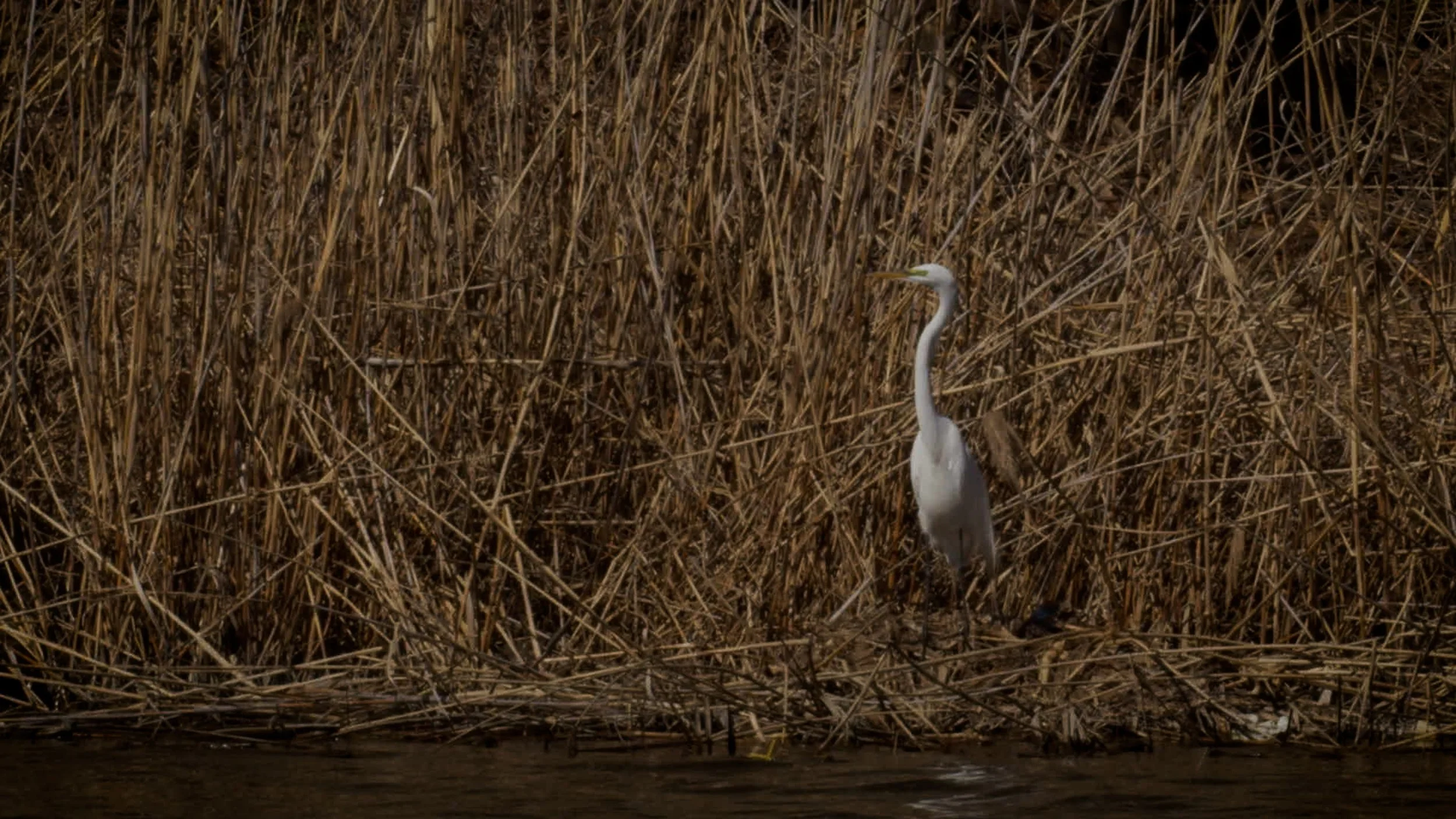
Instead, I headed down the length of grenadier pond. Another spring arrival in full force: egrets. I didn’t stop for them but as I got to the south end of the pond I thought that maybe I should have. I don’t have a fully-formed episode around them, but we’re in the breeding season so they’re showing off their long, delicate display feathers which have a long and bloody history attached to them. And since they’re seasonal, now’s the time to grab them for any future story focused on them. That made two subjects to come back to.
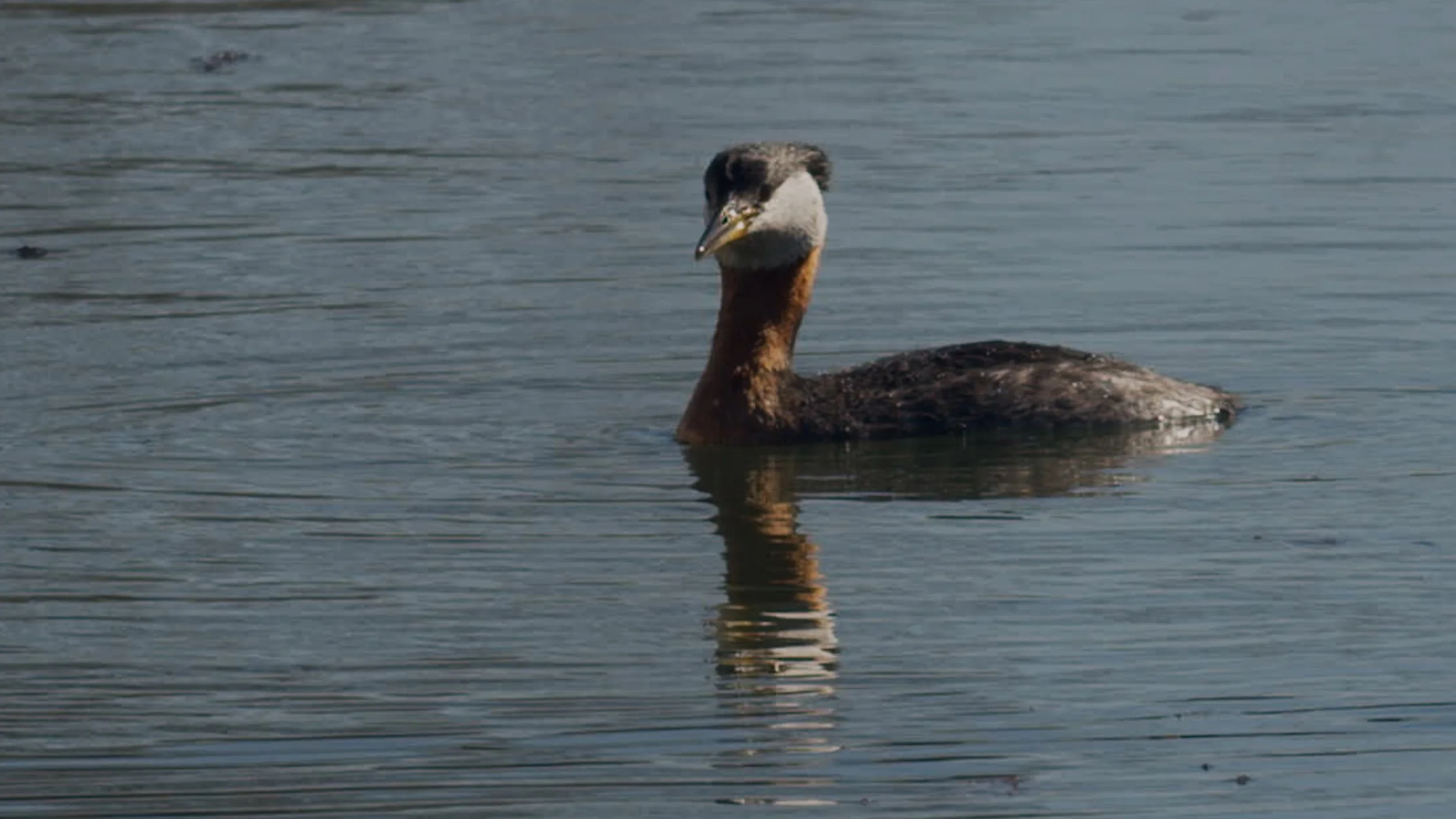
The reason I didn’t turn around right then is, I’d gotten another tip from my mom. At Humber Bay Park, in the stormwater cells, she’d seen a pair of red-necked grebes with a driftwood nest. Grebes seem to be particularly drawn to that area for some reason. Anyway, I’ve got an episode going on nesting and parent / child conflict so I thought it was worth a visit since I’d be in the area. They were right where she said, one of the grebes perched resolutely on the nest, the other making the rounds. He even got into a bit of an argument with another pair of grebes coming in from the lake - I’ve never heard them more vocal.
Back up to High Park with the intention of catching those egrets and their breeding plumage. By the time I got there, most had fled to the far side of the pond and I soon saw why - a little motorboat was making ingress into the wetlands and making the egrets… egress.
I’d like to believe they were there in an official capacity and not just joyriding but, for me, the lesson was the same: a bird in the wetland is worth two hypothetical birds when you get back from Humber Bay Park… or something. Should have just filmed them when they were in front of me.
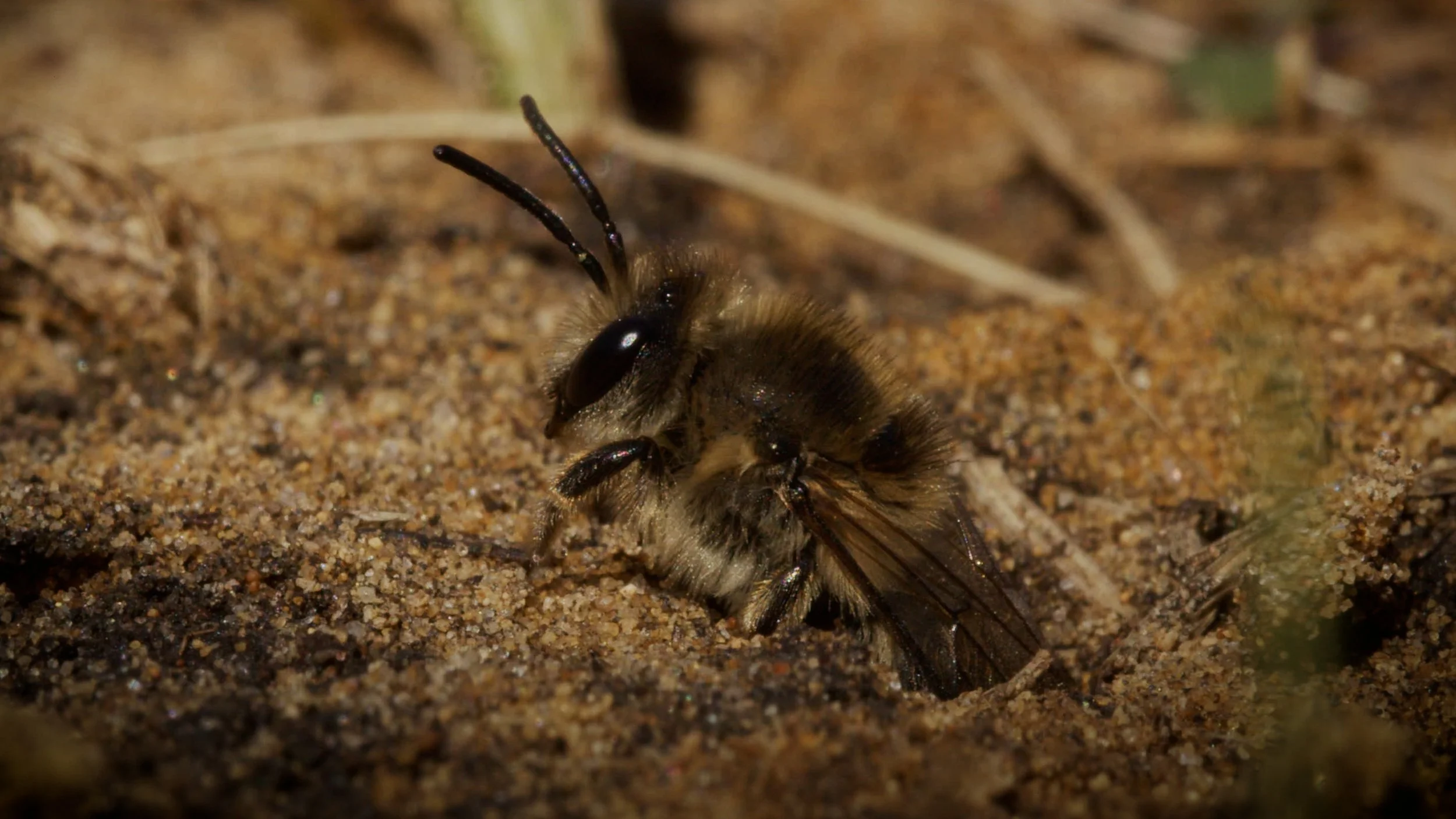
That was a disappointment, but the day ended on a high note. Turns out I’d been right about the bees. Coming back to the savannah in full sunlight, the swarm I’d been expecting was now abuzz. Trying to catch them with a macro lens as they zipped around and only very occasionally landed was more enjoyable than frustrating since it wasn’t like I had a time crunch to do it in or that they were going to move on in five minutes.
I landed enough decent footage of them exploring the area but the money shot was definitely them going into or out of their burrows, which they seemed pretty disinclined to do. I worried that, behaviourally, it was more like they emerged once, had their whole day outside, and then went back in at the end of it. I saw some get tantalizingly close to crawling back in but they’d always think better of it at the last second.
Finally, I took a gamble, picked out a conveniently placed burrow hole, set up the camera to be locked onto it and just waited. And lo and behold, just a few minutes later, two little antennae poked their way up out of it. Better yet, the shy bee inside made several exploratory journeys up and out of the burrow before ducking back inside, in effect giving me multiple takes. It was a very, very rare instance in this kind of work where you can look at the result and say ‘I can’t think of any way that could have been improved’. And when you can say that, you know it’s time to wrap it up.