
Merganser Mea Culpa
Humber Bay Park and… success! Success? With a big fat asterisk.
These days I’m basically hitting any spot that I’ve read is a possibility for hooded mergansers. I’ve been to the Humber River. Leslie St. Spit. Ashbridges Bay. Humber Bay Park was one of the last easily accessible ones on the list.
Hooded mergansers. With fingers crossed for some places to dunk a GoPro. And for a bonus, maybe a flock of chickadees.
I knew right where I was headed, too. Humber Bay has a stormwater management area crossed by a thin pedestrian bridge and split into four rectangular cells. It works by having all stormwater leaving the system into lake Ontario pass through PVC curtains to settle particulate in the water. There’s also an artificial wetland working as a natural treatment filter on the water.
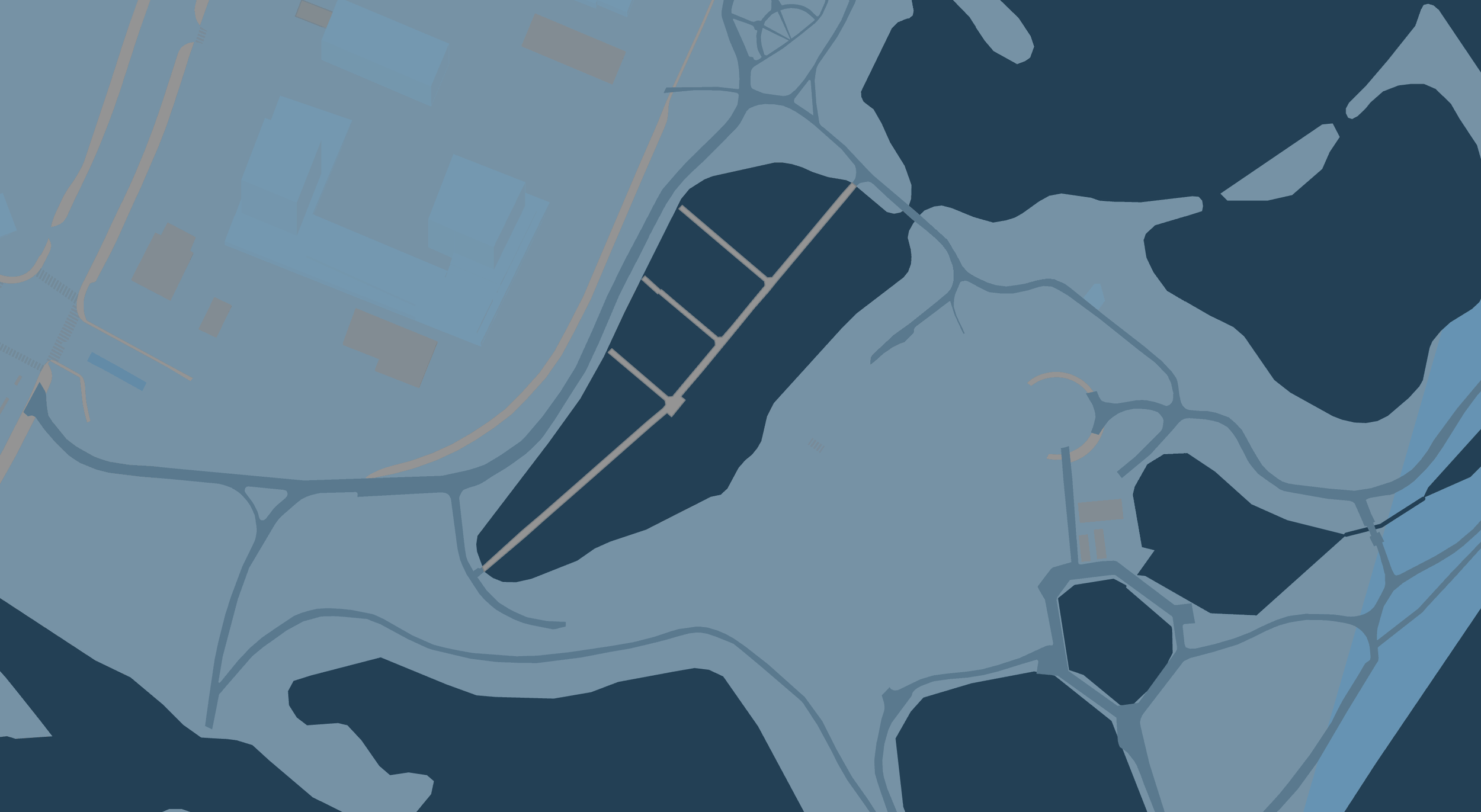
I recall a healthy swarm of waterfowl in those cells in previous winters. And I thought the water would be shallow enough to maybe get some interesting diving footage.
Well - at first I was worried that despite the warmer weather the pools would all still be frozen over.
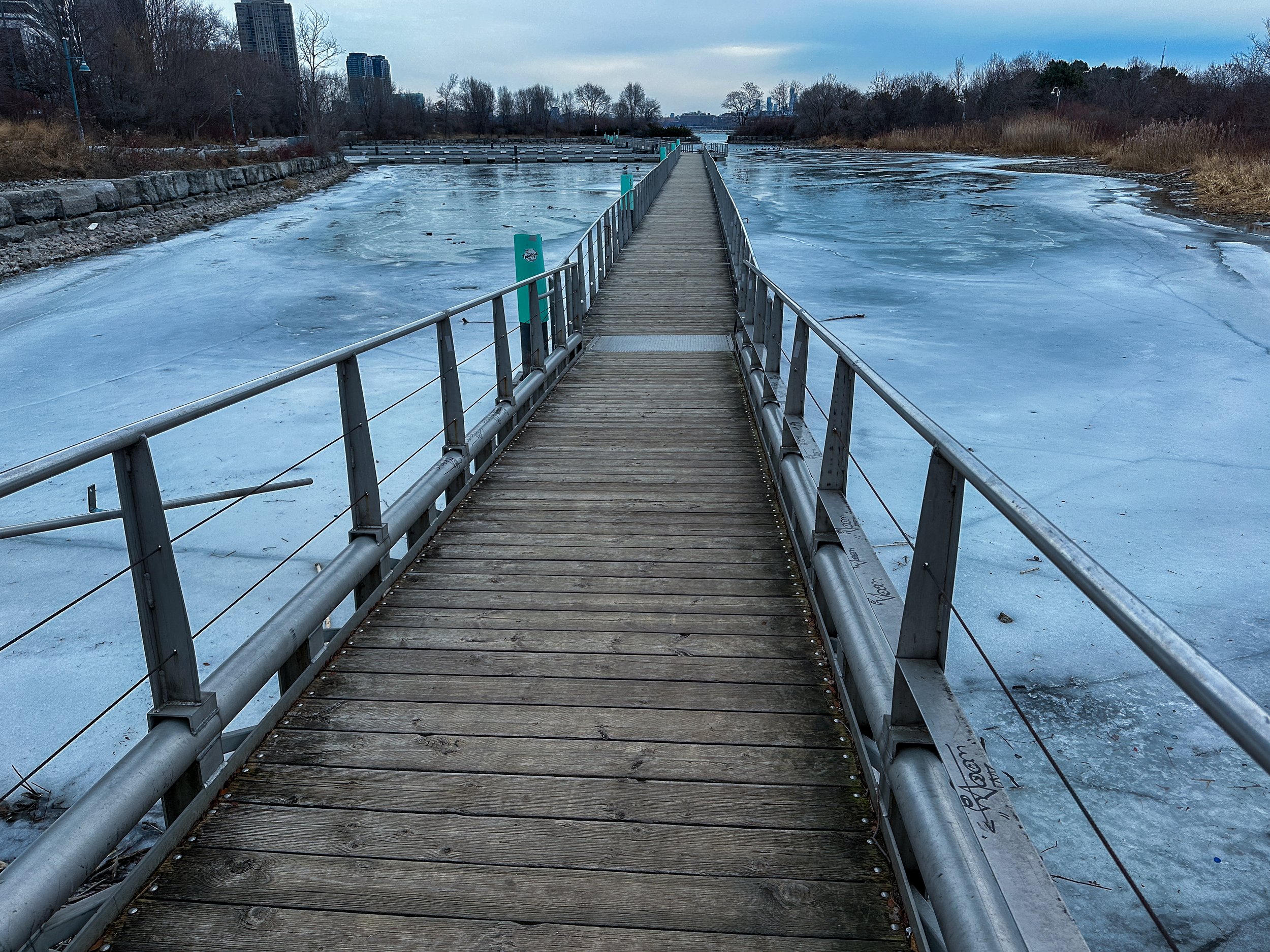
But the further toward the lake you went on the bridge, the more they opened up and at the end there was indeed a big group of birds. Mallards on a line at the ice’s edge, scaups, buffleheads, goldeneyes, some distant grebes I think and…
…no mergansers. Everything but. Ok then.
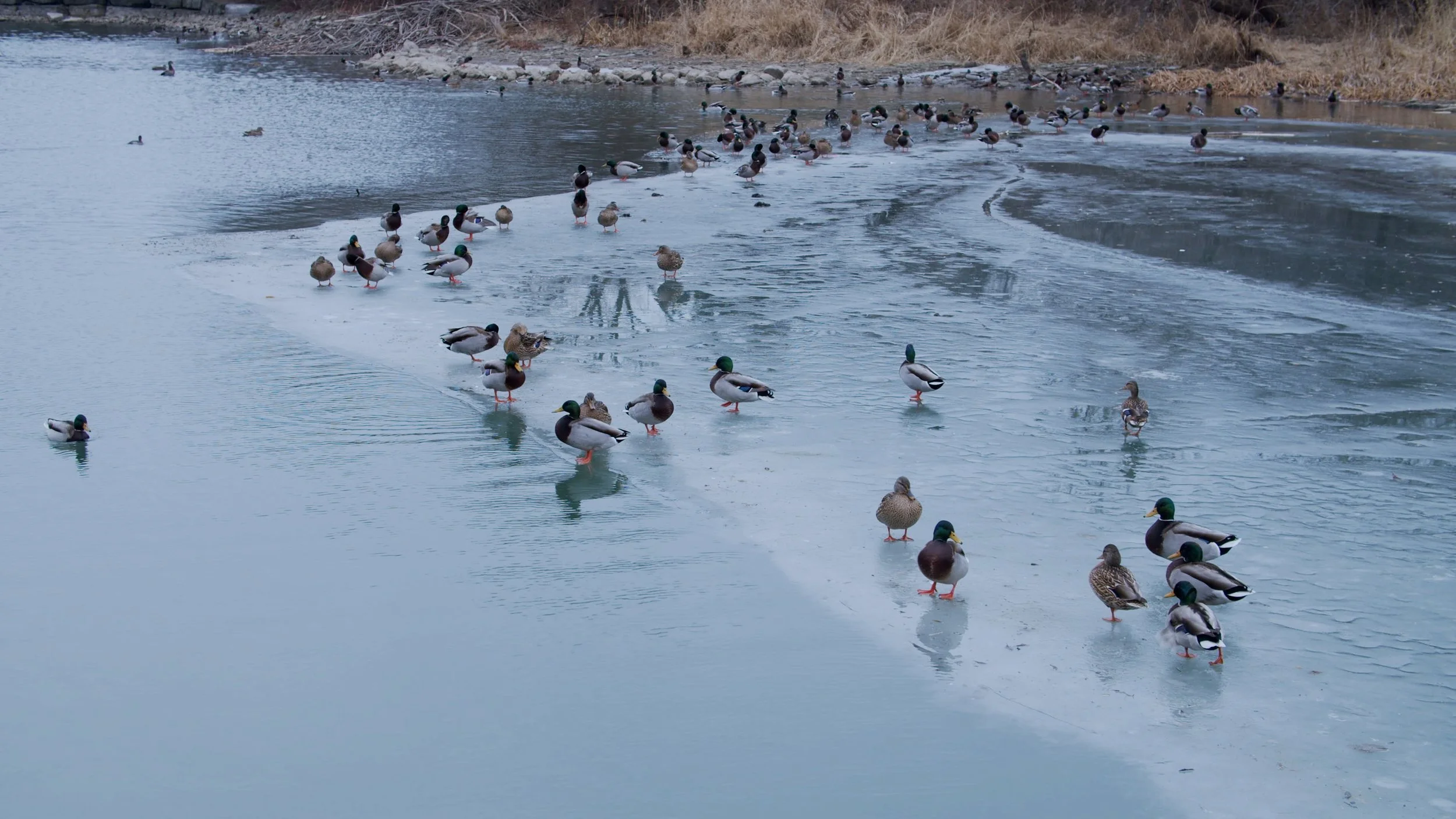
I took the opportunity to grab a few other shots and dunk the GoPro a few times again (still not great dive footage - I’ll just keep trying) before heading east. What I knew about hooded mergansers from my limited exposure is they seem to favour open water. So I hugged the shore almost as far as the mouth of the Humber River but there was nothing visible out there in the water.
Humber Bay Park itself is bisected by Mimico Creek. The east side of the park is almost completely closed off to construction so I crossed to the west cell.
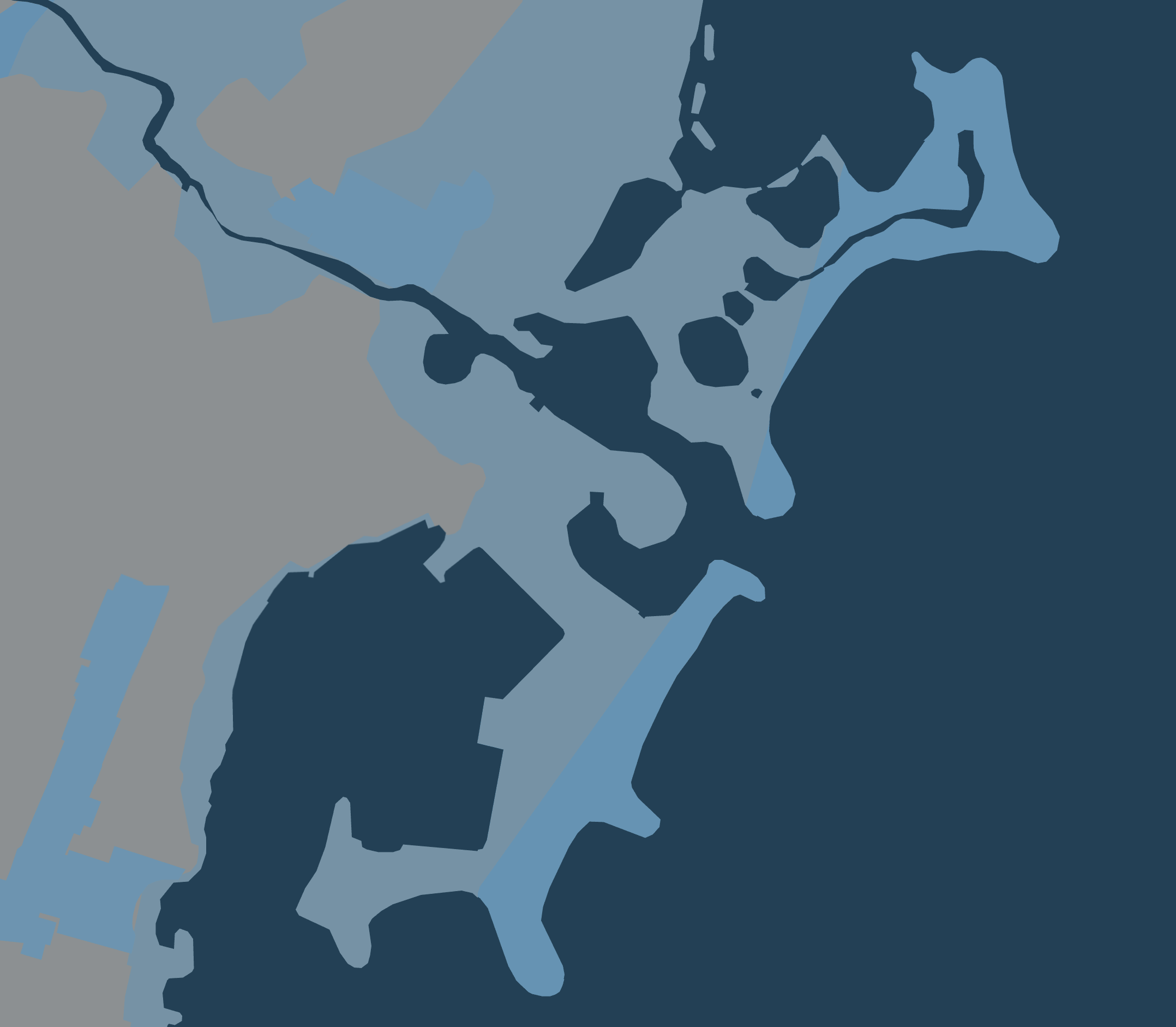
I figured I’d do one circumnavigation around the shore and call it. I saw another group of waterfowl, distant, in a channel leading to a boat launch which would be where I’d end up so at least I could keep some hope on the horizon. As for the rest of the shore, nothing but some intrepid mallard pairs braving the waves.
I finally got to the channel and group I’d seen earlier. As soon as I appeared at the shoreline there was a wholesale shift as everyone in the water hustled quickly away from me. And best of all, the two who I could see MAYBE being mergansers took flight almost immediately.
Sigh.
I actually wonder sometimes about my ostentatiously red (or orange - there’s been heated debate) coat and whether it’s doing me a disservice. Would a me in a boring brown coat have caused such consternation? Worth some A/B testing.
But this was also an opportunity to put another principle into practice. Most animals are easily spooked and don’t like anything sudden - like a bright red giant storming their beach. But they’re also routine oriented and if you settle in, they’ll often decide maybe you’re not so scary after all.
So trying to remain undeterred, I settled on a convenient log on the shoreline, set up my camera for a best case scenario, and waited.
And after a few minutes, I’d say I managed at least third-best-case. The ducks did indeed return. The mallards actually crowded the shore next to me, just a couple of feet away.
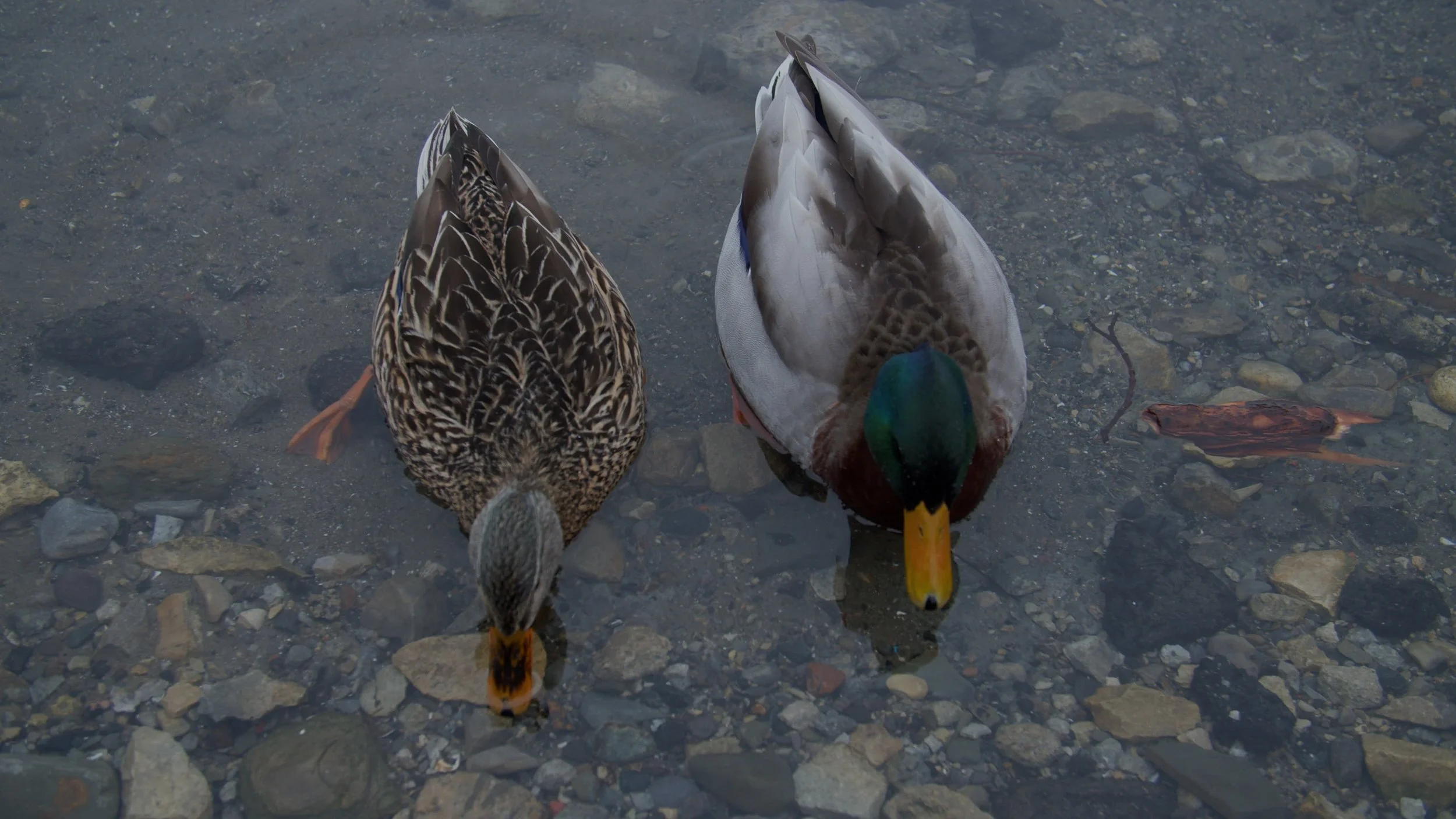
On a 24mm lens, no less.
And the possible hooded mergansers? Yep, it looked like they were here too, in the flesh. A bit far out but certainly the closest I’d been able to catch them in many days of trying. Diving up a storm.
And something clicked as I was watching them, leading to a mea culpa here:
I’ve been misidentifying them for weeks.
I thought I was at least OK at differentiating common mergansers from hooded mergansers - males, at least. Females? Good luck.
So I was pretty confident in a few previous trips that I had seen pairs of hooded mergansers because, looking at the males, those were definitely not common mergansers.
Turns out I was completely ignoring a third species of merganser: red-breasted mergansers.
So, trawling back through my footage to make sense of all this: at the start of the season, I did in fact see a flock of honest-to-goodness hooded mergansers at Leslie St Spit.
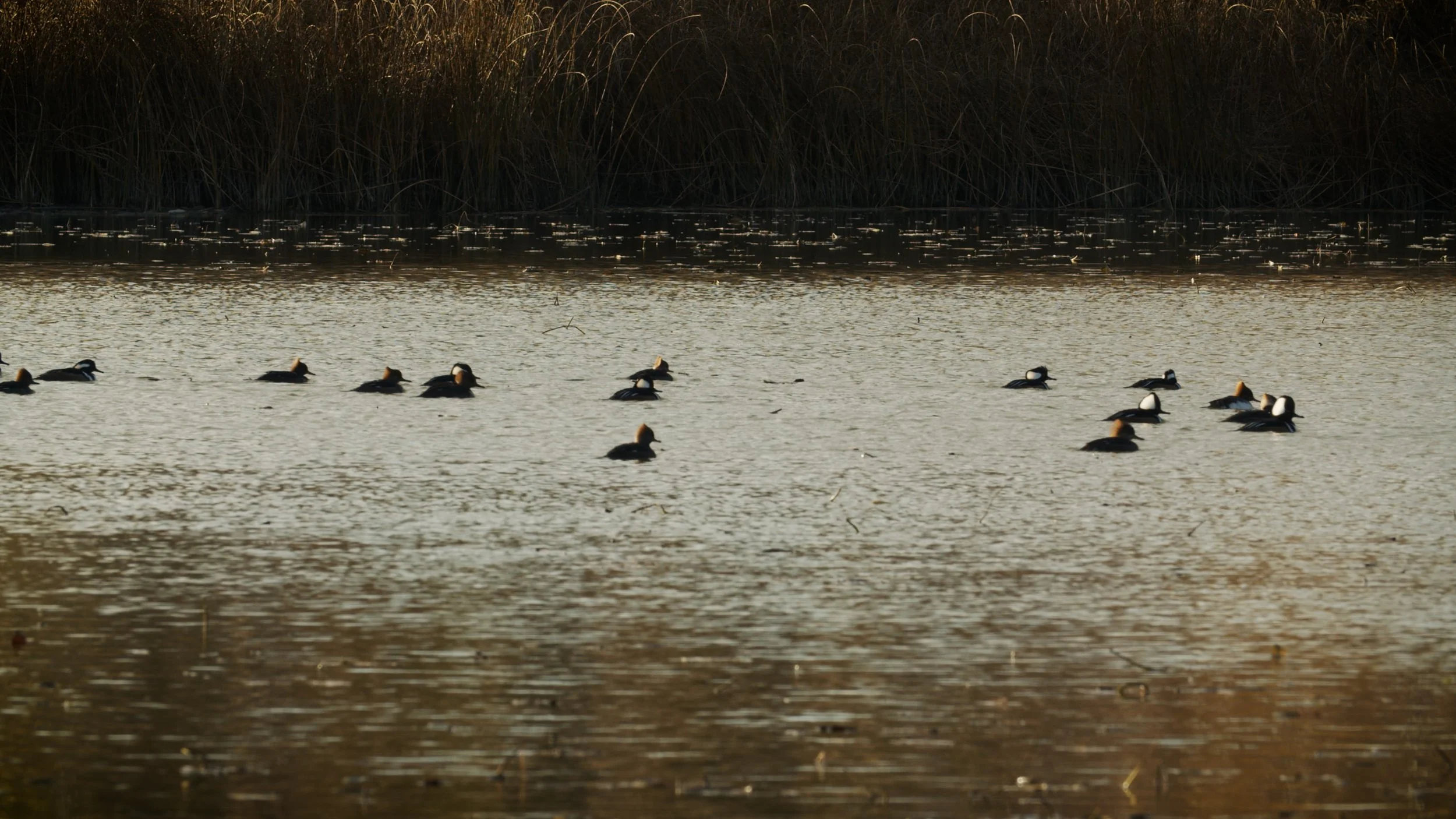
HOODED mergansers.
Since then, I’m pretty sure every single so-called hooded merganser I’ve seen has actually been a red-breasted merganser. I thought they were just moulting their breeding plumage, leaving them with a bit of a ratty hairdo - maybe made rattier from frequent diving.
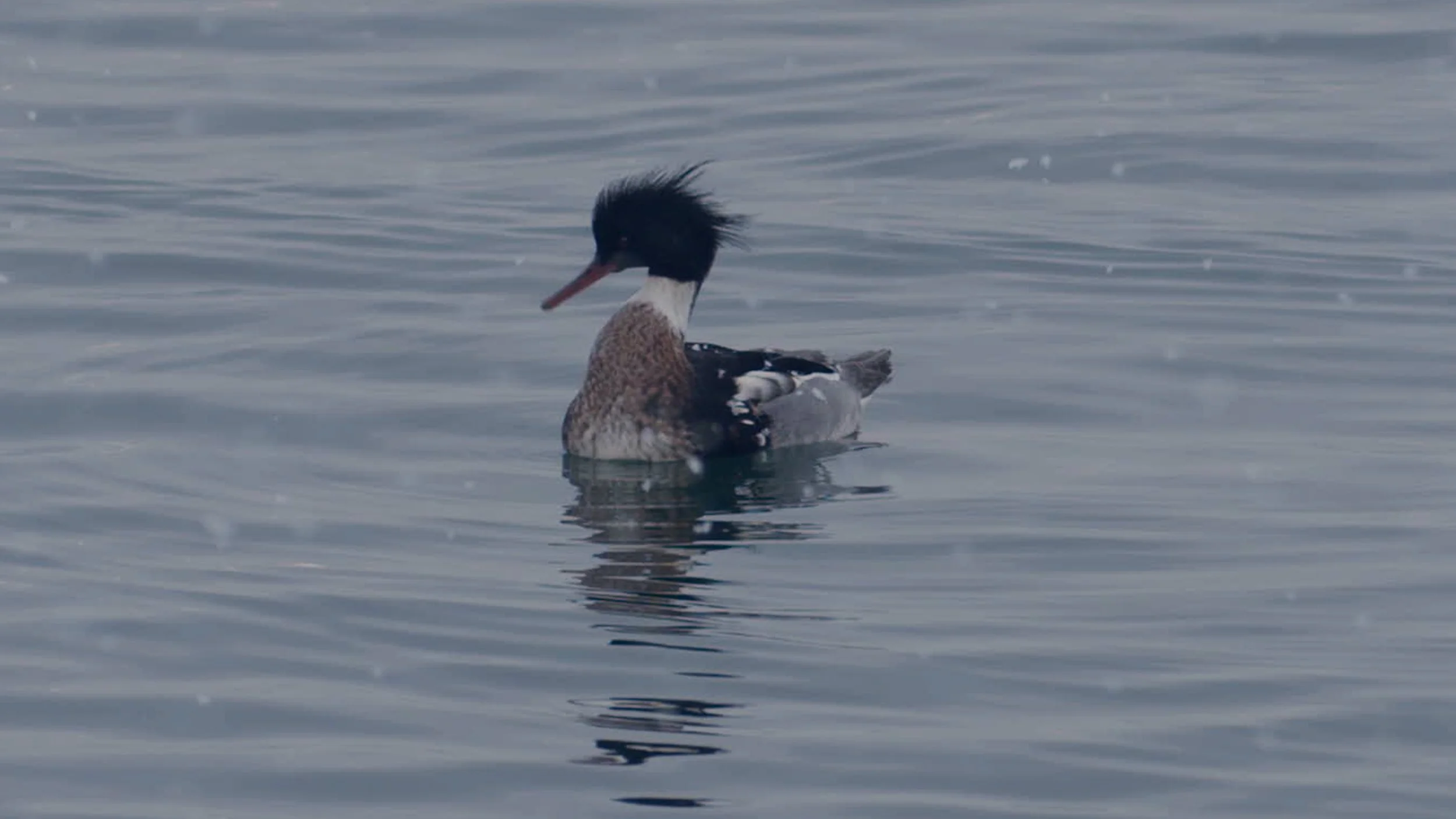
RED-BREASTED merganser.
Nope. And this is killing me because the episode I have in mind is about a particular adaptation that hooded mergansers have. And while it’s theorized and likely that other merganser species have it… there isn’t the same kind of definitive evidence of a scientific study.
So, I need to do a lot more research work to determine how far I can stretch my footage of these other merganser species to tell the story, because right now I am two steps back from where I thought I was. And, if I'm right, since that first flock of hooded mergansers in late November, I have not actually seen another one all winter. So who knows if any of them have even stuck around. Just when I thought I was at enough footage to be able to put the episode together. In fact, the first draft of this post before I got suspicious and double checked my identification was all celebratory: 'first winter episode is in the can!'
Nope.
Welp. This is what makes the job so exciting… if there’s a silver lining to be found here: at least I did get a lot of lovely footage of these mergansers diving.