
Missing Mergansers
A pattern emerging at Leslie St Spit: I don’t get what I go for, but I get a lot of nice surprises nonetheless.
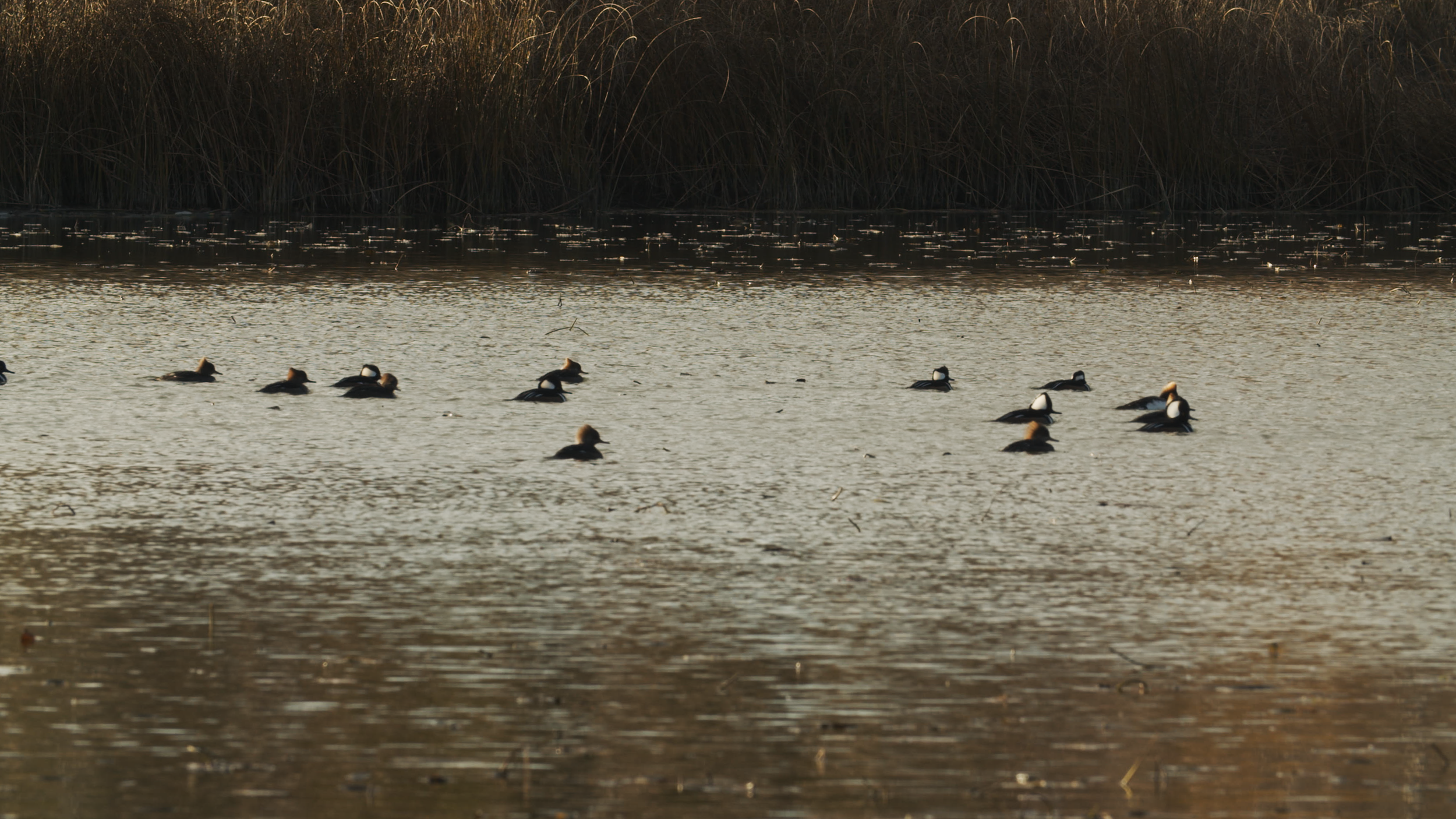
What I went for? Hooded mergansers. This was a weird case. The last time I was there, I bumped into a small flock of them at a pond but because my focus was elsewhere I just fired off a couple of arbitrary shots.
Now I was after them specifically (part of the episode on diving ducks). But I could not for the life of me recall which pond they’d been in. The ‘wall of dead reeds’ in the background of the shot didn’t provide a lot of clues to return to.
Or, I did in fact visit that pond (there aren’t that many, after all) and the mergansers had moved on. I tried most of the waterfowl hotspots to no avail. And they’re becoming more concentrated as the ice moves in further.
So - that was what I went for, now onto the nice surprises.
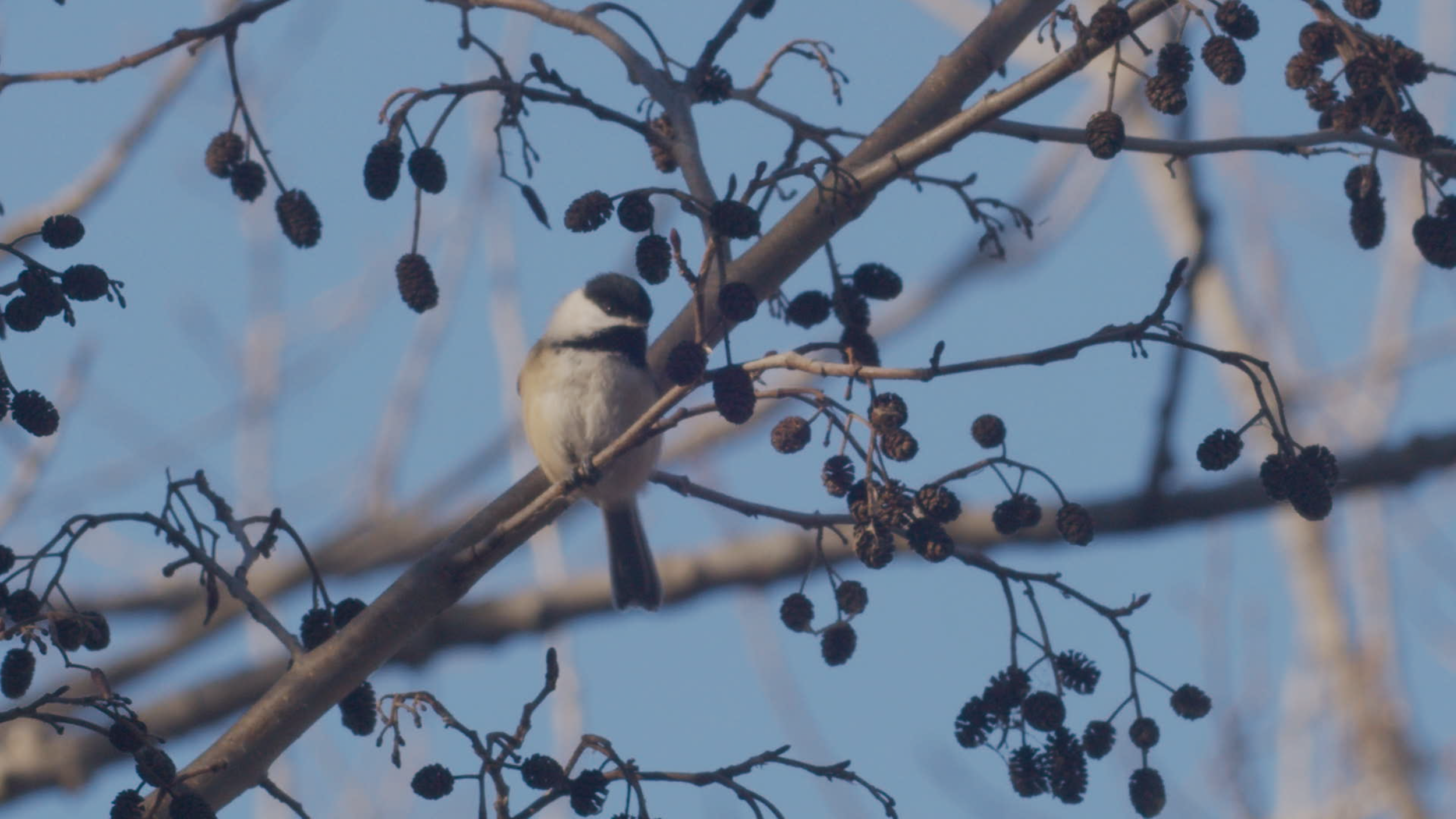
First one being that I finally quality time with some black-capped chickadees. Not enough yet for the full episode but pretty confidence-boosting nonetheless.
That would have been enough on its own, but in the midst of those chickadees I got to catch a funny little moment of a hairy woodpecker muscling a downy woodpecker out of a spot on a tree.
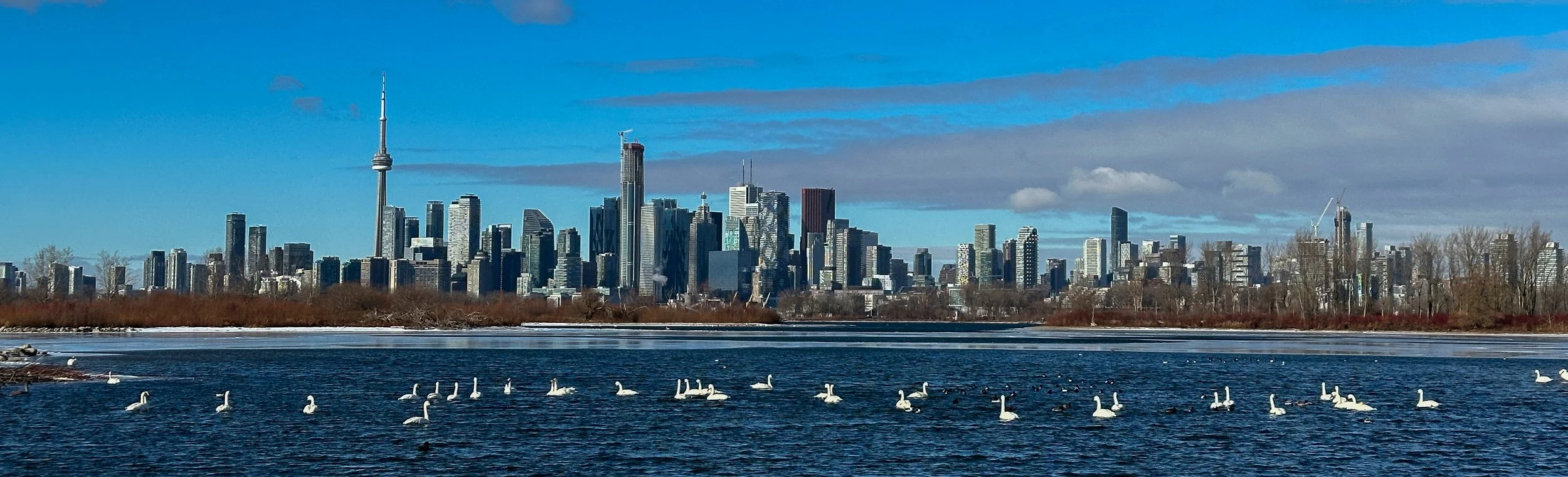
Then, heading over to the floating bridge still hoping for some mergansers, I got everything but: trumpeter swans, common goldeneyes, and the usual concentration of very vocal long-tailed ducks.
Since I’d concentrated on them heavily last time I didn’t spend too long there, but managed to grab a shot on my phone of their synchronous group diving.
Then, arcing around and visiting a few more ponds, still on the off-chance of some hooded mergansers (no luck - pretty much all frozen over) a bird of prey came swooping along the path and using the stiff breeze to hover above.
I’m terrible at raptor identification. I call everything a red-tailed hawk so… this might have been a red-tailed hawk, but I think it was too small. Peregrine falcon? Some other smaller hawk??
Anyway - as I made my way back toward the entrance, we kept encountering each other, and he kept swooping and diving and, if I’m not mistaken, going after some of the same chickadees I was after, with more malicious intent.
It all would have made incredible footage - necessary footage, even, for a planned episode on winter hunting - but I was not set up for it.
My typical lens for most close-up work on wildlife is a 400mm. Which is perfect for keeping a respectful distance. And often, depending on circumstance, distance, size of subject, etc. etc. etc. I’ll shoot in 120fps, which my camera can only do by windowing the sensor from 4k to 1080 - effectively turning my 400mm frame into an 800mm frame*.
*(Which I know is effectively the same as shooting a 4k frame and punching in later, but that is not how my brain works)
That effective 800mm frame can be great: I can catch things even further away, and the 120fps lets me get more usable footage out of less ‘real-time’ seconds of a subject being in frame and in focus. But it can also be a huge headache.
Finding a subject - a chickadee, say - in a wall of interweaving branches when the window you’re getting through your monitor is like a percent of a percent of a percent of your view is a skill that takes a lot of practice, a lot of patience, and I’m still not all that good at it. More times than I can count, an animal I’ve been after has struck a perfect, cinematic pose in front of me and I’ll spend ages scanning around on the monitor trying to get them in frame, only to have them move on before I’ve found them.
Plus, once you do find them, every micromovement of the camera is magnified. However stable you get it, however tight you’re screwed in on your tripod, the almost microscopic wobble of the camera if you nudge it one way or another becomes dizzying waves of motion at 800mm. And if there’s even a breath of wind blowing across it? Forget about it. It makes the footage unusable unless you get very lucky with post stabilization.
That’s all a preamble to say: imagine doing that with a bird of prey who is soaring, swooping, diving and wheeling, and you’ll understand why I walked away with effectively zero usable footage of him, not for lack of trying. I do have lots of footage of blurrily swinging the camera around trying to find him in an empty sky though! Maybe that’ll come in useful some day.
On the bright side: lots of good stuff on the rest of the trip, and honestly encouraged by how consistently I have seen birds of prey there. Like the chickadees, it’s a war of attrition. Enough trips, enough attempts, and I’ll build up the footage I need - just need to keep my eye on the long game.