Canadianimation
I’m back in animation land on the first three of this new group of episodes!
Animation has always been a thorny thing for me. Simultaneously a chronic pain in the ass and an absolute saviour. And an element I frequently have big aspirations for that never seem to quite gel.
Originally, way back when I started this project, I wanted to make a rule where I didn’t do any animation. The star of the show was Canadian wilderness and wildlife - why make all the effort to go out and capture it only to cover the episode in manufactured imagery?
Well, those scales fell from my eyes pretty quick so I’ll tell you why: three reasons.
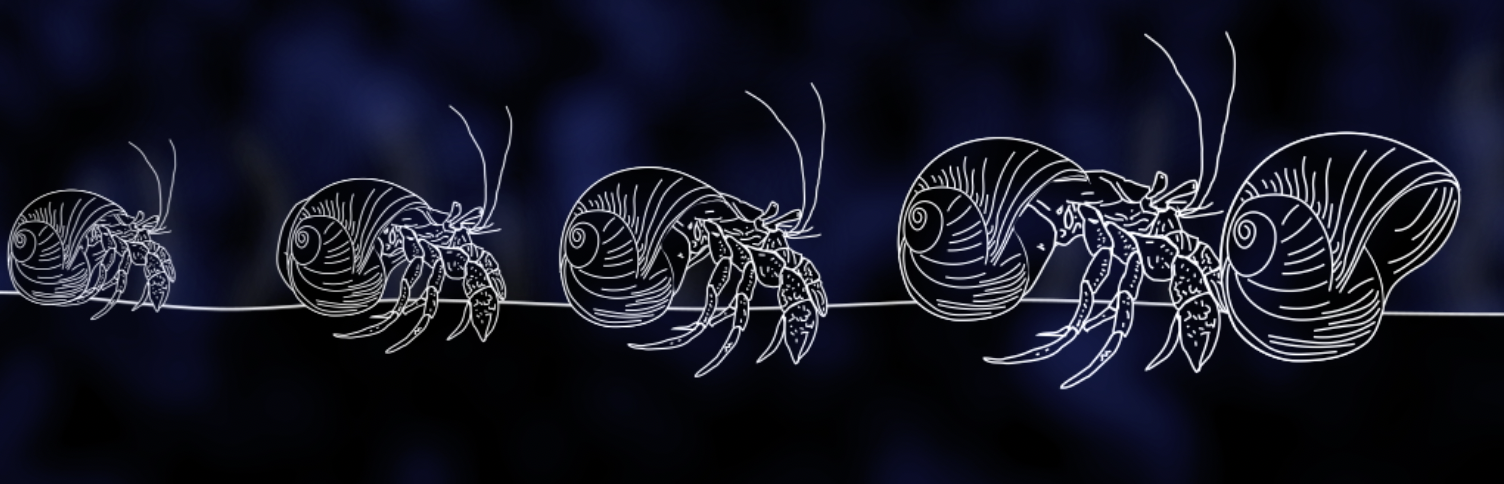
1. Sometimes that wilderness is uncooperative. When an episode focuses on a specific behaviour, for example, I just don’t have the resources of say a BBC Nature production to wait for weeks to catch it. A good example is the Hermit Crab episode I did on the East Coast, all about their shell-swapping behaviour. I got lots of general footage of hermit crabs. I had none actually showing this behaviour. So the choice would be between doing a rather generic episode listing facts about hermit crabs, or delving into this much more interesting part of their lives. The latter just required that I animate it. So animation lets me expand the kinds of stories I can tell in a huge way and can bandaid parts of stories I really hoped I could catch live but just… didn’t.
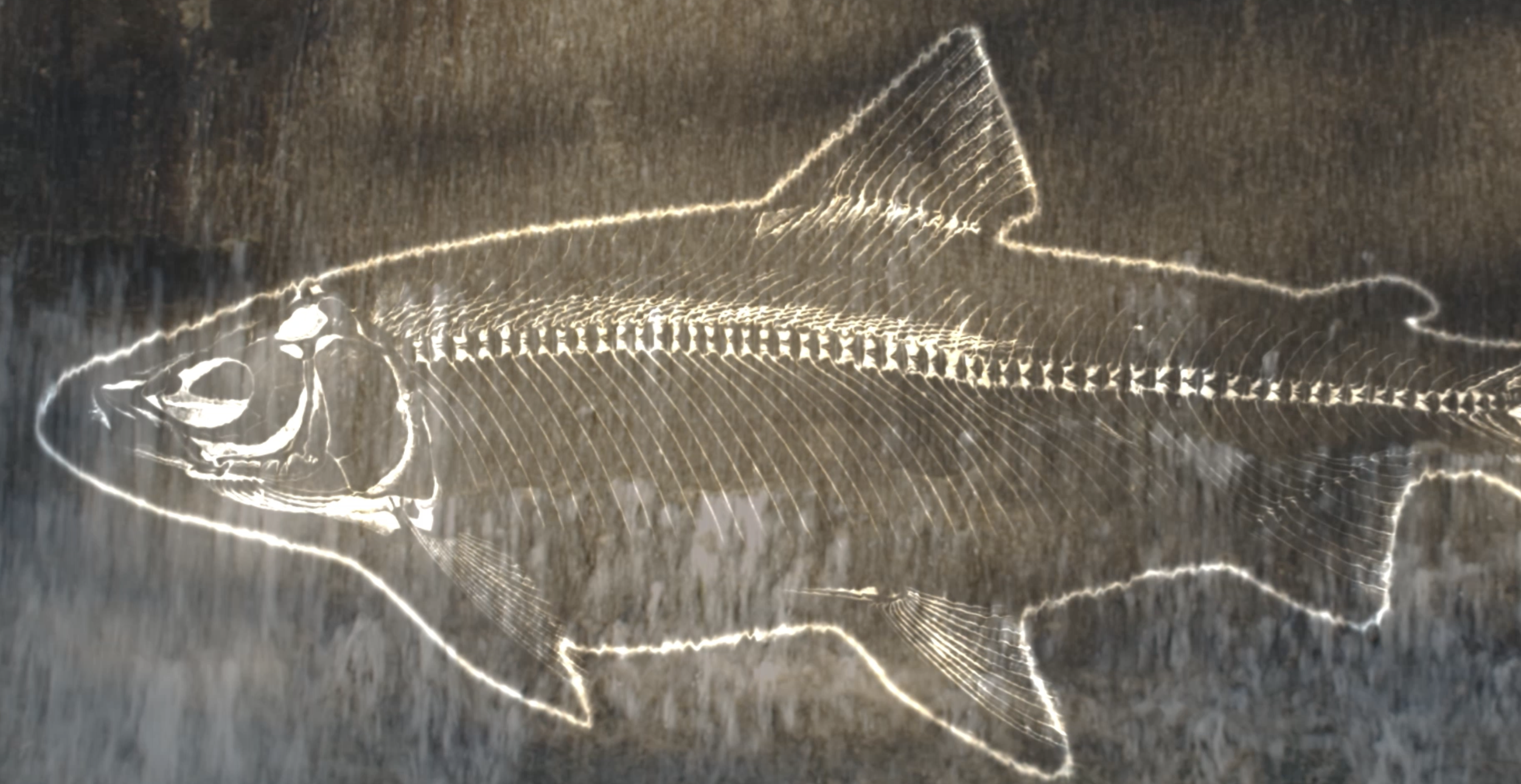
2. I tend to go deep on topics. Something that I hope differentiates Canadianimals from other nature content is that it doesn’t leave stones unturned - literal or metaphorical. The example I tend to give is from the Salmon Run episode. When I hear that fish use the earth’s magnetic field to navigate, I’m not satisfied to say ‘wow, that’s crazy’. I immediately say ‘how?! Specifically, how?!’ and part of what I want to do here is always answer that follow-up question. Sometimes simplified but never ignored. That often requires delving deep into biology, or history, or geography to give a satisfying answer: realms that are much better served by the freedom and precision of animation than attempting to shoot live footage that somehow illustrates the same thing. Another good example from the East Coast, one of my personal favourites: Purple Worth More than Gold. An episode about Canadian whelks that takes us to Phoenicia in 1570BC. Hard to shoot that live.
3. I don’t want to be on camera. Personal preference. The easiest solution to a lot of this might be for the edit to jump back to me, direct-to-camera, explaining the stuff I can’t shoot, with all kinds of gesticulations and a lovingly lit background. I just don’t wanna do that. I’m not comfortable on camera. And I’m of the opinion that, given the choice between staring at me or staring at something, anything, else, people will choose the latter 100% of the time, so again: animation wins out.
Over time that animation has settled into something of a ‘house style’. White on black, simplified, clean lines and shapes. Satellite imagery on maps, though for this new batch I’m trying to find a source that I can customize to keep it in that house style a little more.
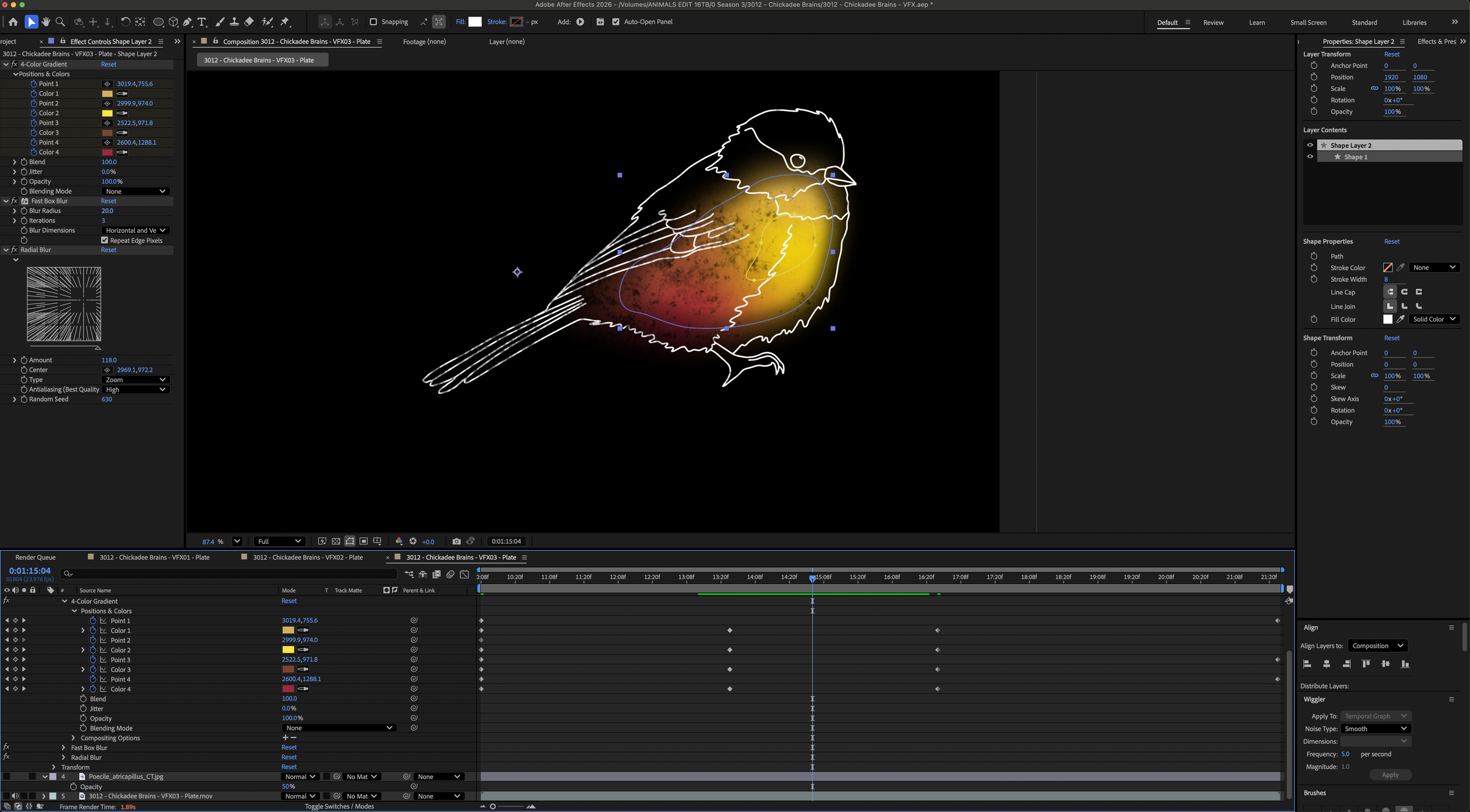
Everything I do is in Adobe After Effects. I’ve been a brute force learner which means I started ages ago when making dumb movies with my high school friends. Whenever we’d want to do some cool effect, I’d figure out how to do exactly that one effect. That means I have a very specific, very limited, very lightsaber-centred skillset and I imagine that someone who actually knew what they were doing would be horrified with how I achieve stuff. I exist perpetually on the edge of ‘works for me’. Which is not to say any of this is half-assed. One of my fears is that amateur animation will bring down the value of the whole thing so I play within my lane but try to hold it to as high a standard as I can.
Over the years I’ve had a few moments of experimentation with revising this style. In that salmon video you can see the limited animation moments are inset on live footage. That’s something I thought I could do as a rule, find natural ‘frames’ in the environment to serve as backdrops that keep everything in the same literal world. But in many cases using a live shot as a frame for animation just clutters and detracts from what’s actually being communicated.
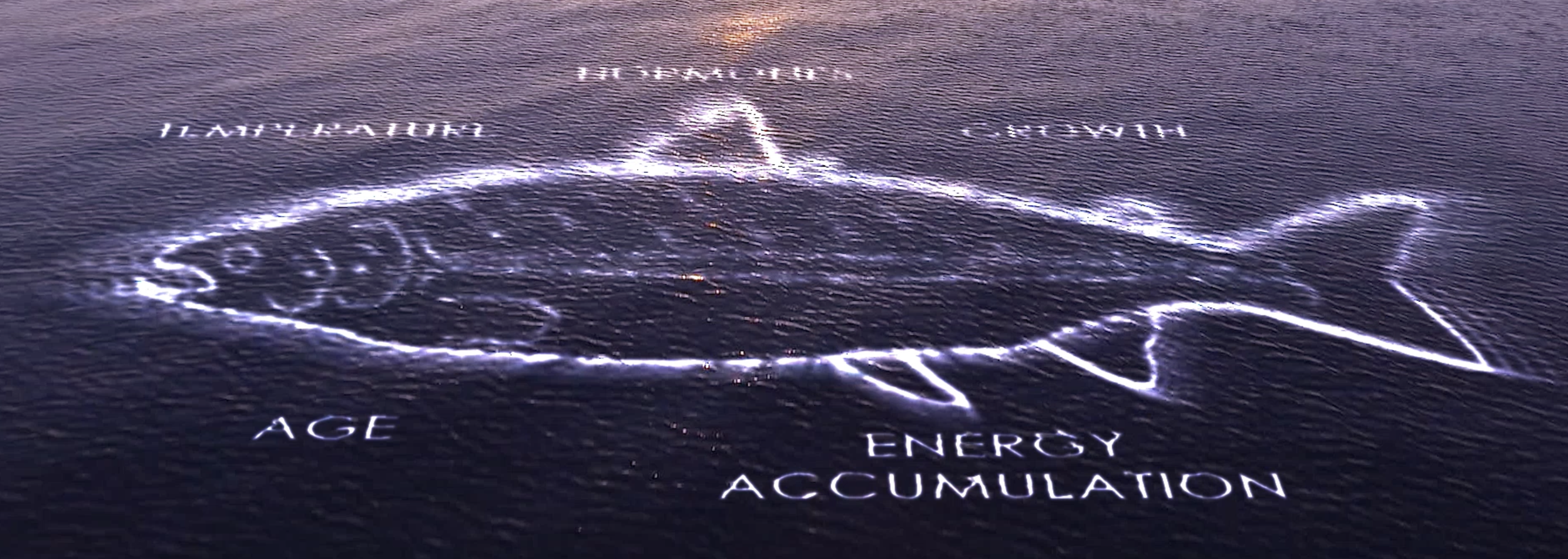
There have been wilder ideas too, like using bits and pieces of nature - twigs, feathers, rocks, etc - to make 2D stop motion mosaics instead of doing things digitally. Another way of keeping all of the visual language in the tangible, natural world. At the end of the day, these ideas all fall prey to the same problems. Too much overhead, too much time, I’ve already got the juggernaut of researching, writing, shooting, recording and editing to worry about and don’t need a whole new process to jam in there. So I come crawling back to my simple but functional motion graphics approach.
Which I don’t mean to disparage. The whole series, in a way, is a constant series of compromises with the hopes that they don’t seem too obvious. That’s just the nature of… well, nature. If I went out one more time, could I get a better angle of this? I caught this beautiful moment on camera but there’s a branch slightly obscuring it, do I use it? I need to zoom in significantly in post to frame this properly, is it going to look soft? I just slapped a stabilizing algorithm across ten shots in a row and I can see the warp artefacts, how obvious are they to other people?
The mantra is always that if you have an audience hooked, they’re not looking for those little errors or thinking about all the compromises you have or have not made. And if they are noticing, that means they’re not hooked, in which case… you have bigger problems.