
A Small Digression into Turkey Anatomy
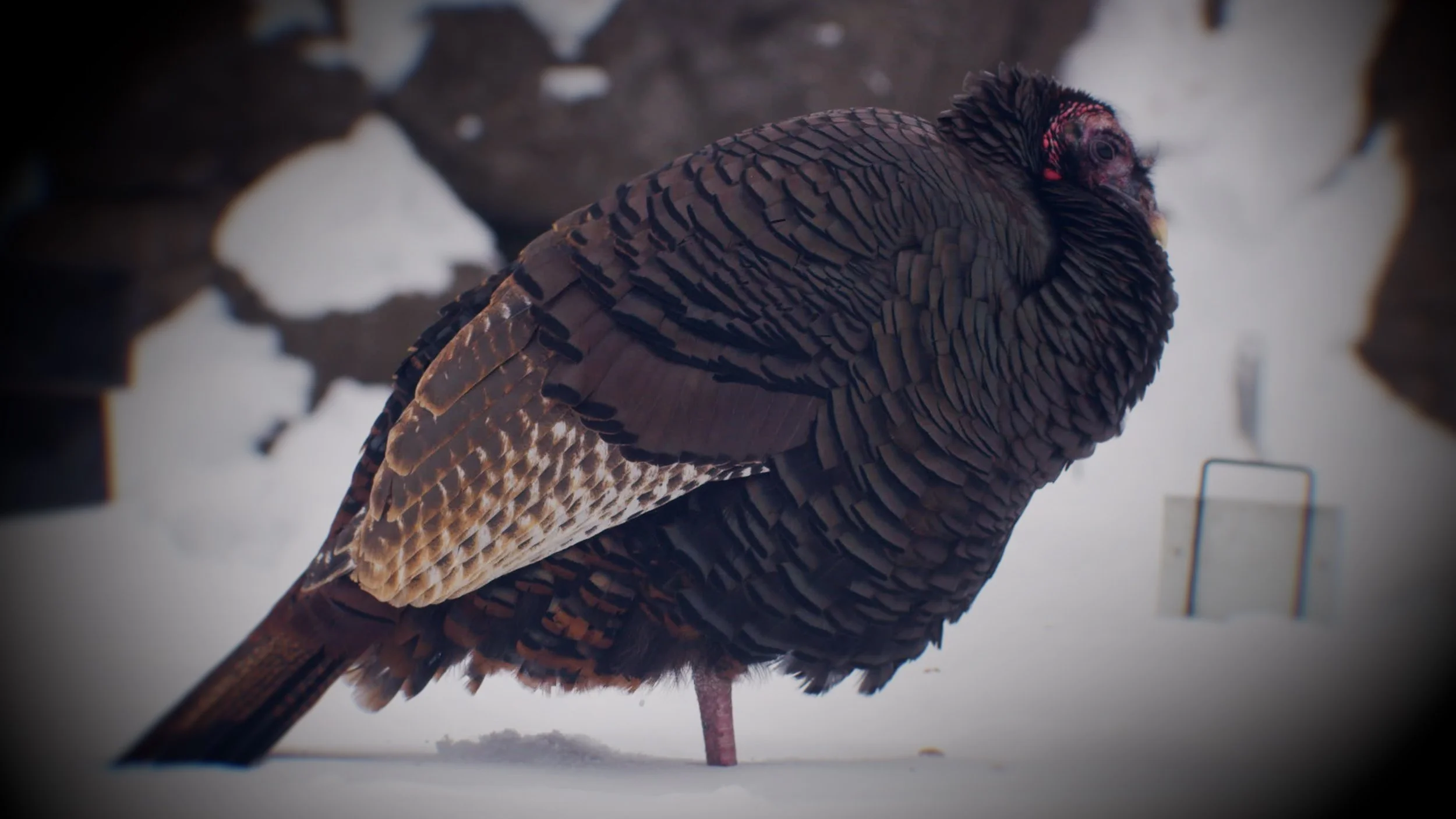
I’m out of town for a bit so this will be a short one. In getting acquainted with wild turkeys lately, whether on the paths of Mud Lake or winding between the gravestones at Beechwood cemetery, I’d also started paying more attention to all their physical peculiarities you don’t tend to register on first glance.
Maybe ‘iconic’ animals get reduced to an icon so much we overlook the details and turn them into a silhouette. Or maybe the turkey is such an amalgam of oddities that no one of them ends up sticking out. But they started sticking out to me, so I was curious, so I read into each of them a little bit.
Red heads
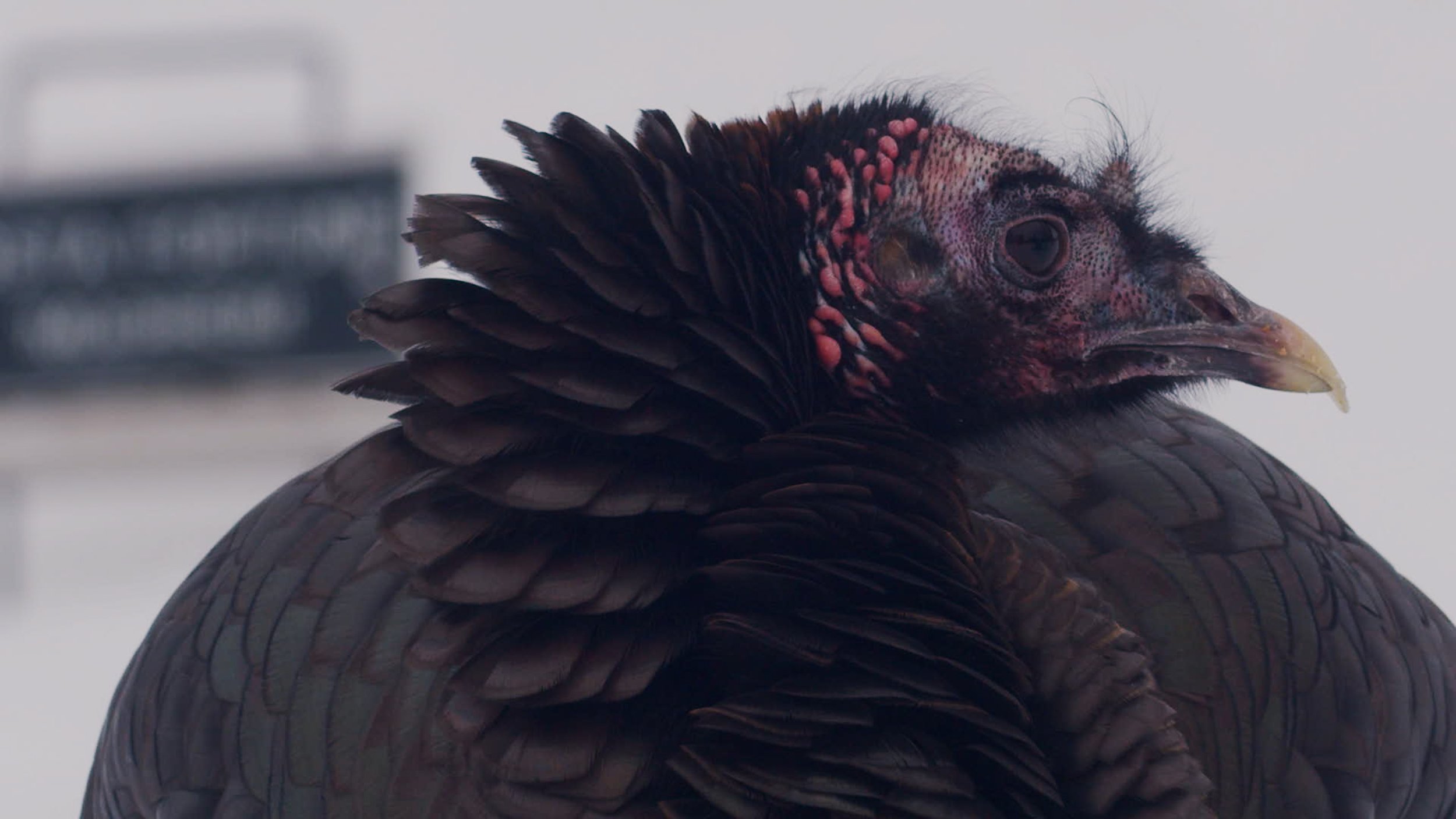
The striking red bulbous head of the turkey draws the eye pretty immediately. They really had some fun with naming its components, too. The bumpy, knobbly skin is made up of fleshy growths called caruncles. They get that vivid colour because, lacking feathers, all of the blood vessels are so close to the surface. It’s also a mood indicator! Turkeys can flush with anger like we do, helping with social signalling.
But that’s not even accounting for the wattle (the fleshy bit hanging down from the turkey’s neck, not particularly visible here) or the snood (the protruding flap that can hang over the beak), both also apparently health and sexual selection indicators. A male turkey with a big wattle and snood is the sexiest turkey around.
The snood on that turkey up top is that little noblet between his eyes - they grow and shrink dramatically depending on the season. This is a snood at its least dramatic.
Spurs
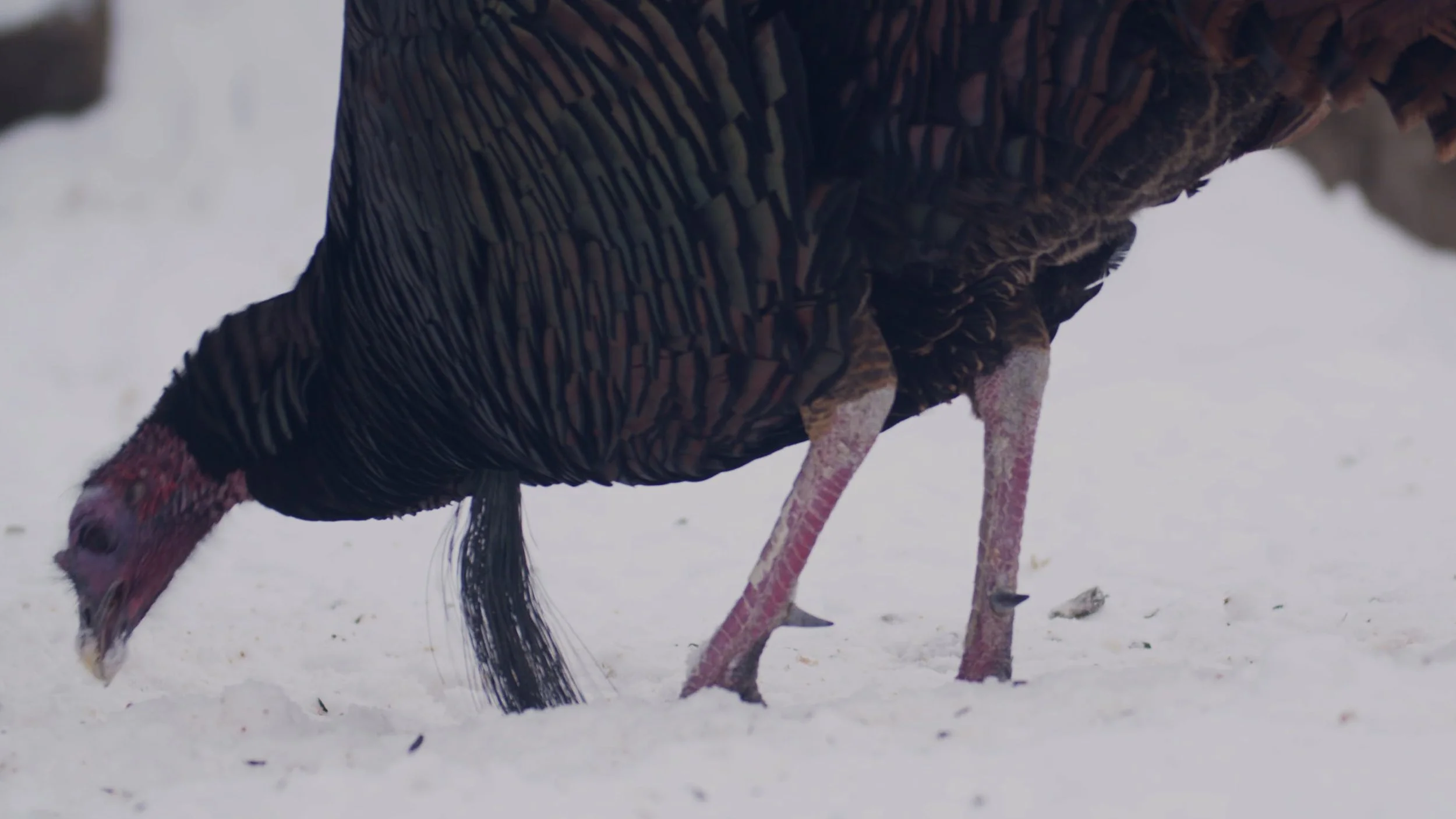
I also noticed some handsome (and slightly intimidating) spurs on the Beechwood cemetery turkeys. These keratin growths stick out from the back of turkeys’ legs. They’re most commonly found in males, but females can sometimes develop them too. They’re a good indicator of age, can get several inches long, and they’re used for exactly what you’d expect - defence and fighting amongst males.
Beards
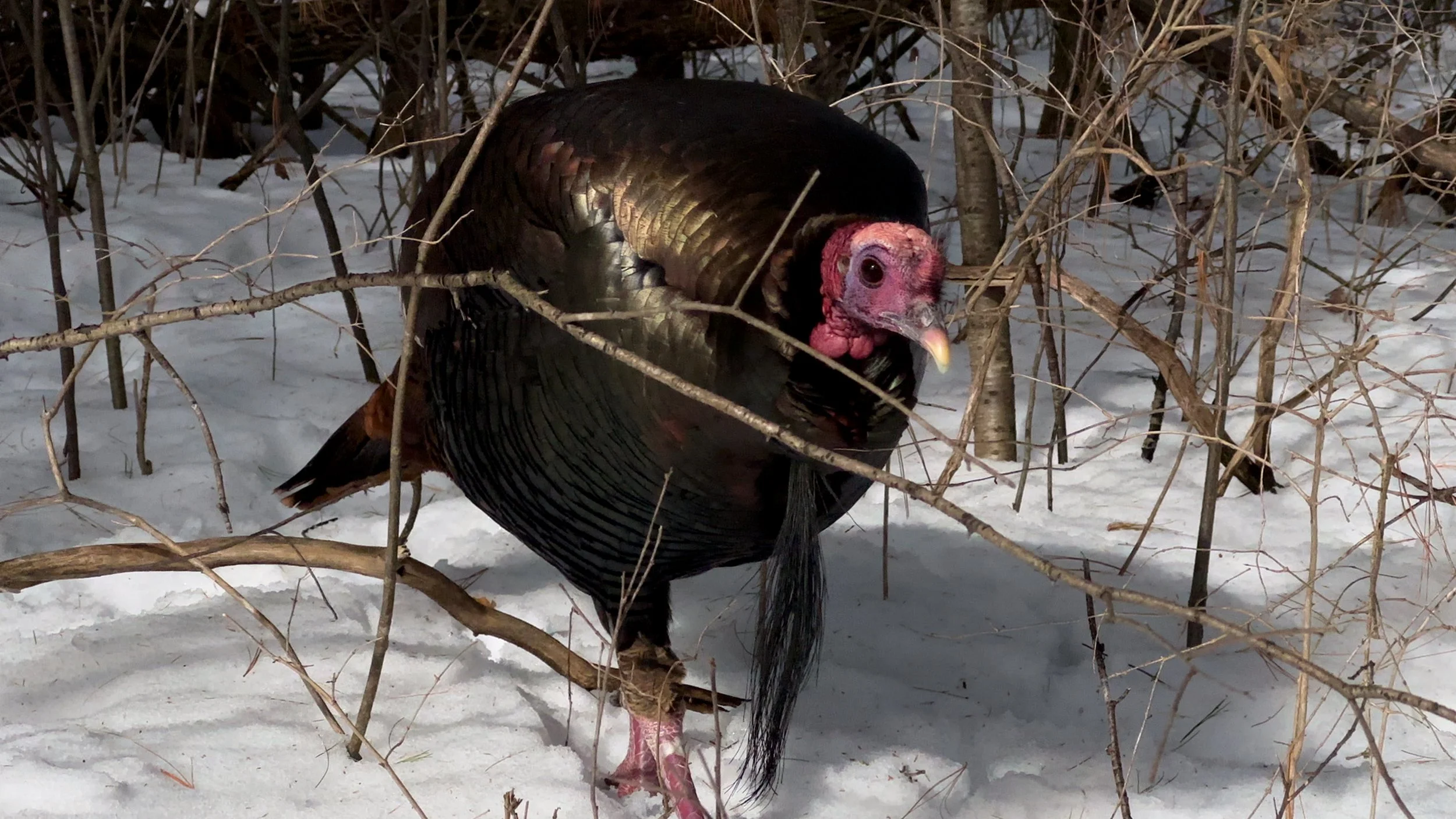
This was a new one for me. Turkeys’ crimson heads are hard to miss. Their spurs, which they share with a lot of other Galliformes, can be a bit of a shock but aren’t all that unusual. But this was the first time I had noticed they had beards. And yes indeed, the actual name for these growths are ‘beards’.
But they’re not hair, exactly. They’re feathers, modified to grow long, thin and filament-like out of the turkey’s chest. They’re another good age indicator and can get to more than ten inches long on older birds.
They’re found primarily on males but, oddly, not exclusively. 10-20% of wild female turkeys also grow beards. And we’re not sure why because, more to the point, we don’t know why any turkey has them! They’re presumed to be a secondary sexual characteristic but beyond that we don’t really know for sure. They’re not actively used in display, as far as we know. Best guess may be that length of beard indicates survivability - good quality in a potential mate.